
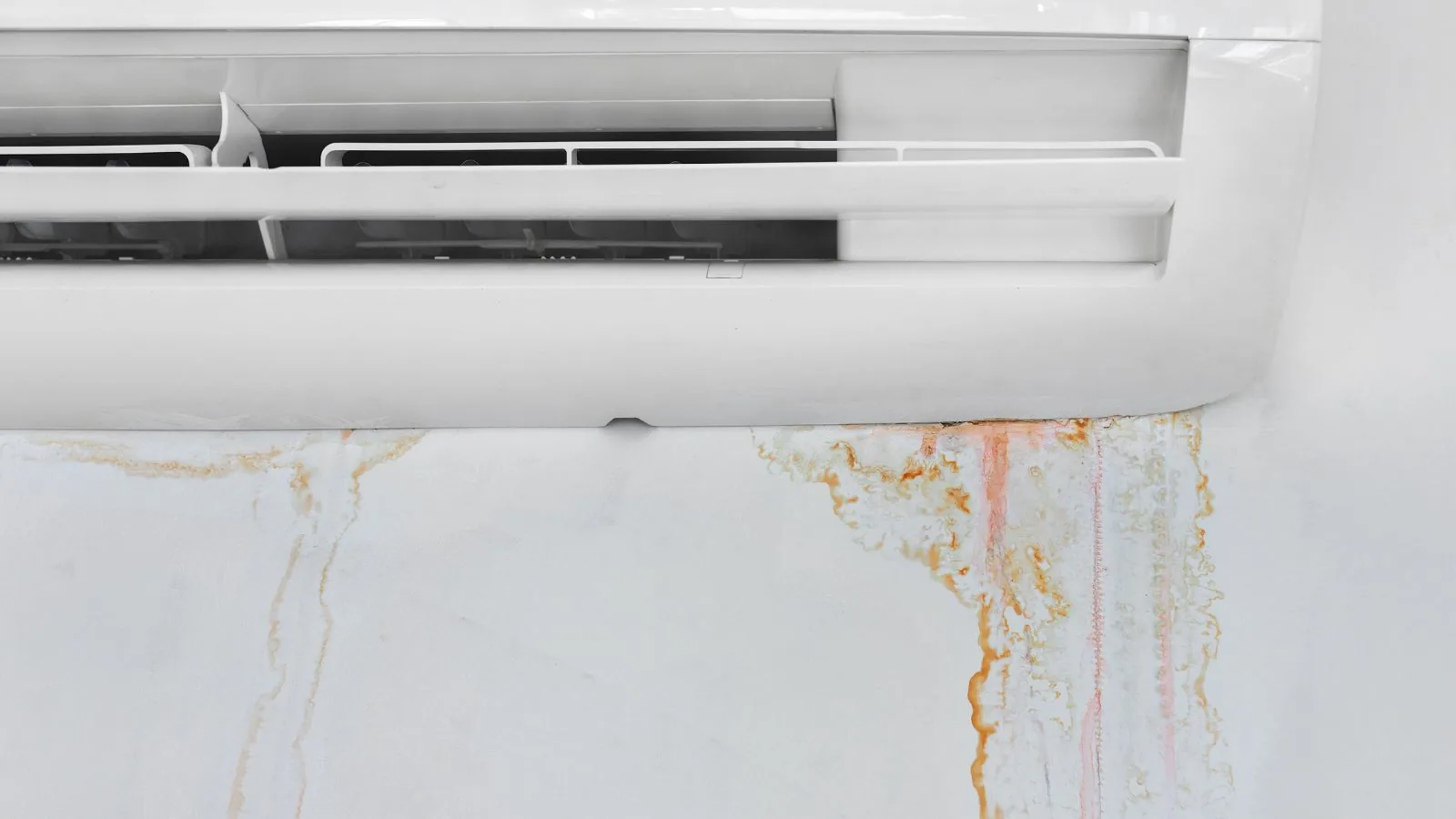
What an AC leak does to a house
AC leak water damage in Byron Center, MI usually comes from condensation, not from a failed pipe. An air conditioner pulls moisture out of the air as it cools it, and that water has to leave the house through a condensate drain line. When the line clogs with algae or debris, the drain pan overflows, and water runs into the closet, attic or ceiling below the air handler. Turn the system off at the thermostat, stop any visible drip with towels and a bucket, and call (833) 521-1033 if the water has already reached drywall, carpet or flooring.
The damage looks different from a pipe leak. It tends to be slow and repeated. The water comes in small amounts every time the system runs, which can go on for a season before anyone notices. By then a ceiling stain, a swollen closet floor or a musty smell is the first sign.
Where condensate goes wrong
The common failure points are few:
- A clogged condensate line that backs up into the pan.
- A cracked or rusted drain pan under an attic or closet air handler.
- A float switch that does not shut the unit off when the pan fills.
- An uninsulated line that sweats and drips onto the ceiling below.
- A frozen evaporator coil that melts and overfills the pan.
An HVAC technician repairs those parts. The restoration side deals with the wet drywall, insulation, carpet and subfloor the water reached. Both jobs are needed, and the order is simple: stop the water, dry the structure, then repair what the leak broke.
| Air handler location | What gets wet | Cleanup focus |
|---|---|---|
| Attic | Insulation, ceiling drywall below | Remove wet insulation, dry ceiling cavity |
| Closet or utility room | Carpet and pad, baseboard, wall bottoms | Extract carpet, dry wall base, see carpet water damage |
| Crawl space or basement | Subfloor, joists, insulation | Dry framing, check for mold conditions |
| Wall mounted or window unit | Wall surface, baseboard | Dry wall, repair finish |
Drying after an AC leak
Because the leak is slow, the damage often runs deeper than it looks. A moisture meter and thermal camera find the wet zone, and air movers with a dehumidifier dry the room. Insulation that stayed wet above a ceiling is usually removed instead of dried. Ceilings and closets that stayed damp for weeks may show early mold, and mold work follows industry standard ANSI/IICRC S520, so ask any company whether its crews work to it. Wet ceilings are covered on the ceiling water damage page.
What shapes the cost
Duration
A one-time overflow is smaller than a leak that repeated for months.
Location
Attic leaks add insulation and ceiling work. Closet leaks add carpet and wall base.
Materials
Carpet, drywall and subfloor each have their own recovery limits.
Drying days
Slow leaks leave deeper moisture, which can add equipment days.
Rebuild scope
Drywall, paint and flooring once the area reads dry.
A crew explains the scope and price before work starts. Call (833) 521-1033 for your own numbers.
Insurance and AC leaks
Coverage depends on whether the leak was sudden or gradual. A drain pan that overflowed once may be treated differently from a line that dripped for a season. Check your policy or ask your insurer. Photograph the stain, the pan and the line before anything is cleaned out.
Serving Byron Center and nearby towns
AC leak calls come from Byron Center, Dorr and Caledonia, mostly in summer when systems run heavily. Mention whether the air handler sits in the attic, a closet or the basement when you call.
Frequently asked questions
Can an AC leak cause mold?
It can create conditions for it. Repeated moisture in a closet, attic or ceiling is how mold starts, so drying should not be delayed. Health questions belong with a physician.
Do you repair the air conditioner?
No. An HVAC technician repairs the unit, the drain line and the pan. The work here is drying and repairing the water damage the leak caused.
How do I know the leak is from the AC and not the roof?
AC leaks follow the system's running cycle and show up near the air handler, while roof leaks follow rain. A moisture check and the leak's location help separate them.
Should I keep running the AC if it is leaking?
Turn it off until the drain problem is fixed. Running it keeps producing water that has nowhere to go.