
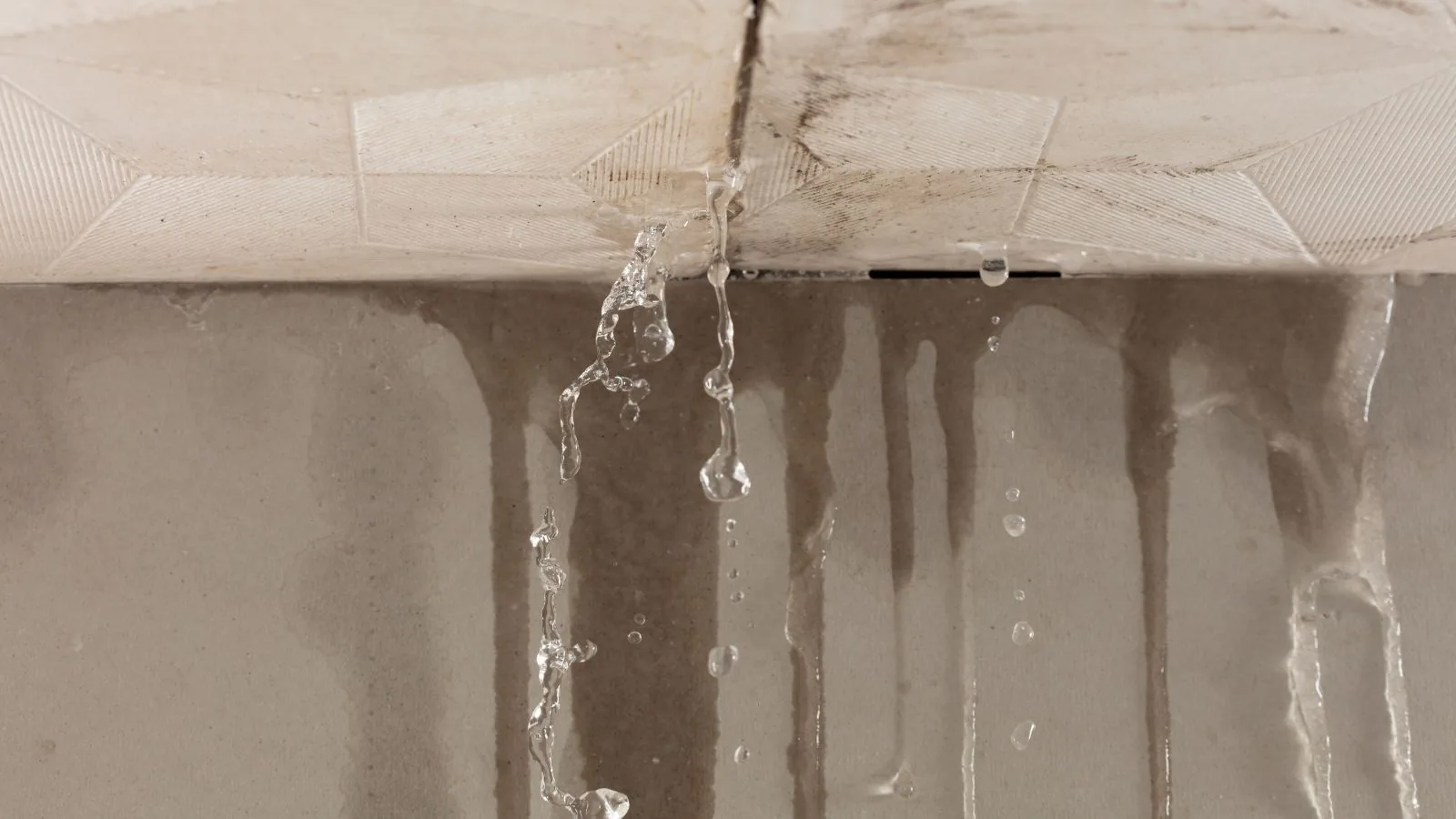
When a wet ceiling is an emergency
Emergency ceiling water damage in Byron Center, MI becomes urgent when the drywall starts to bulge, sag or drip. A ceiling holds water that cannot see daylight, and the weight can bring down a section of drywall without much warning. Call the 24/7 line at (833) 521-1033, keep everyone out from under the damaged area, and if you can do it safely, puncture the bottom of the bulge with a screwdriver over a bucket so the water drains in a controlled way instead of all at once.
While you wait:
- Move furniture and electronics away from the wet area, or cover them with plastic.
- If water is near a ceiling fixture or fan, do not touch the switch. Turn off power at the panel only if it is dry and reachable.
- Photograph the stain, mark its edge with a pencil and note the time. A spreading edge tells the crew the leak is active.
- Do not poke around a stain that is already dry. That may be old damage.
Where ceiling water comes from
A ceiling stain is a symptom. The cause sits above it, and the list is short: a roof leak through shingles, flashing or a vent boot, a supply or drain line in an upstairs wall or floor, an upstairs bathroom or toilet that leaked, or an HVAC unit or condensate line in the attic. Finding the cause matters because cleaning a ceiling without fixing the source just restarts the damage.
| What you see | Likely source | First step |
|---|---|---|
| Brown ring that grows after rain | Roof, flashing or vent boot | Tarp or roofer, then dry the attic |
| Stain below a bathroom or laundry | Toilet, tub, supply line or drain | Shut off the fixture's water, call a plumber |
| Drip near a hallway or closet with an air handler | AC condensate overflow | See AC leak water damage |
| Stain with no rain and no fixture above | Line inside a wall or floor | Moisture mapping to trace it |
Roof leaks and the ceilings below
Roof leaks are part of ceiling damage because the roof is only the entry point. Water enters through the decking, soaks the attic insulation and then travels along joists and the top of the drywall until it finds a low spot to drip. By the time a stain shows, insulation above is usually saturated, and wet insulation stays wet for a long time because it holds water against the drywall.
A roofer or the homeowner stops the leak at the roof. The restoration crew handles the water below that point: removing wet insulation, opening the ceiling where readings stay high and drying the framing. Ask for moisture readings in the attic and wall tops, not only on the visible stain.
Repairing the ceiling
Small, dry stains can be sealed with a stain-blocking primer and repainted. Anything that stayed wet for days, sagged or bubbled is cut out and replaced, then taped, textured and painted to match. If the water traveled down inside a wall, the work continues into wall and drywall repair. A drying plan with air movers and a dehumidifier often runs in the room while the cut-outs dry.
What shapes the cost
Source and access
A shallow attic leak is easier to reach than water inside a ceiling cavity under a finished floor.
Size of the area
A single stained panel is a smaller job than a whole room or a hallway.
Insulation
Saturated insulation above the drywall is bagged out and replaced.
Texture and paint match
Ceilings with texture or popcorn finishes take more time to blend.
Drying days
Attic and ceiling cavities dry slowly without ventilation.
A crew explains the scope and price before work starts. Call (833) 521-1033 for numbers that fit your ceiling.
Insurance for ceiling water
A burst line or a sudden roof opening from storm damage may be covered. Long term seepage and lack of roof maintenance often are not. Check your policy or ask your insurer, photograph the damage and keep the failed part if a plumber replaces one.
Serving Byron Center and nearby towns
Calls come in from Byron Center, Dorr and Caledonia. If the leak is a roof leak, the dispatcher can still arrange the drying and ceiling work while you arrange the roof repair.
Frequently asked questions
Do you handle ceiling water emergencies at night or on weekends in Byron Center?
Yes. Ceilings do not sag on a schedule, and the 24/7 line is answered nights and weekends. Keep people out from under the damaged area while you wait.
Is a sagging ceiling dangerous?
It can be. Wet drywall is heavy and can fall. Stay out of the room, and drain the bulge through a small hole over a bucket if you can do it from a safe position.
Do you repair roofs?
No. A roofer fixes the roof. The work here is removing the water, drying the attic and ceiling and repairing the interior drywall.
How long until a stain stops being a problem?
A stain stops growing when the source is fixed, but the wet materials behind it still need drying. Painting over a damp ceiling usually fails.