
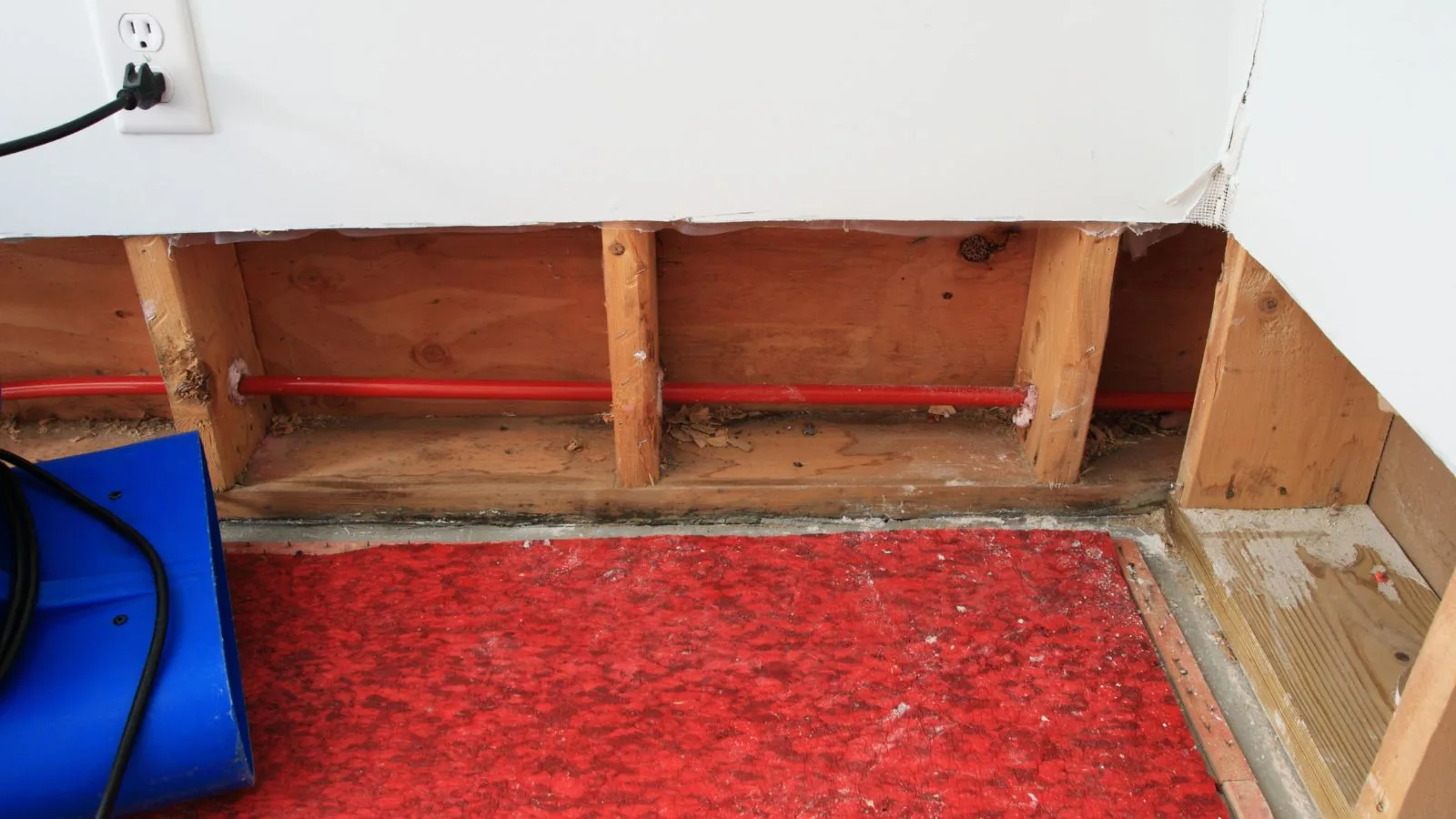
The water is gone but my walls and floor still feel damp
That feeling is accurate. Removing liquid water does not remove the moisture held inside drywall, framing, subfloor and insulation. Those materials act like sponges and release water slowly into the air, which is how a room that seems dry can keep growing damp for days. The trade name for the work that fixes this is structural drying and dehumidification, and it is what turns a wet building back to normal moisture levels.
Water mitigation is the broader term for stopping damage from spreading, and drying the structure is its core. It is a different job from cleanup, which removes visible water, and different from repair, which replaces ruined materials.
How drying equipment works
Drying is controlled evaporation. Air movers push dry air across wet surfaces so water leaves the material. Dehumidifiers pull that moisture out of the air so it does not settle somewhere else, and low grain refrigerant dehumidifiers suit wet building materials well. Moisture meters read the water content in wood and drywall, and a thermal imaging camera shows temperature differences that point to damp areas.
Equipment is placed from readings, not guesses. A typical setup positions air movers along walls and across floors, runs a dehumidifier in the closed room and checks moisture daily until readings reach a dry standard for each material.
| Tool | What it does | When it is used |
|---|---|---|
| Moisture meter | Reads water content in wood and drywall | Start, daily, and at finish |
| Thermal imaging camera | Finds cold, wet areas behind surfaces | Mapping and checking |
| Air mover | Moves air across surfaces to speed evaporation | Floors, walls, cavities |
| Dehumidifier | Removes moisture from the air | Whole room, closed spaces |
| Wall cavity drying | Moves dry air into opened wall bays | Wet insulation or framing |
How long does drying take?
Most drying jobs run for several days, and the exact number depends on the materials, the amount of water and the conditions. Dense materials such as hardwood and concrete dry slowly, while carpet dries faster once the pad is out. A crew checks daily readings and removes equipment when the building reaches normal moisture, not on a fixed calendar. Equipment is used on the job, not rented to homeowners, so the work includes the monitoring.
Why the readings matter more than the feel
Hands and noses are poor moisture meters. A wall can feel dry on the surface while the bottom plate and insulation inside still hold water, and a floor can look fine while the subfloor is wet. That is why drying is judged by numbers. The crew records a starting reading, tracks it each visit and compares it with a reading from a dry part of the same building, which sets the goal for each material. When the numbers match, the equipment comes out. Without them, owners tend to stop early, close up walls on trapped moisture and find a musty smell weeks later.
What drying prevents
The EPA says mold can begin to grow on damp materials in 24 to 48 hours, and drying quickly is the main way to limit that. Drywall that stays damp can deteriorate, wood can warp and swell, and insulation loses its value when wet. Drying the building also shortens the repair scope, since materials that dry in place do not need replacing.
Mold work is a separate trade following the ANSI/IICRC S520 standard, and this site does not diagnose or make health claims. Structural drying usually follows water extraction and is part of a burst pipe or flood job.
What shapes the cost
Area and materials
More wet square footage and denser materials need more equipment.
Wall and floor cavities
Water inside walls and under floors needs special setups.
Days of equipment
Each day adds monitoring and equipment time.
Humidity conditions
A damp season or a closed house changes the drying rate.
Documentation
Daily logs and photos support an insurance claim.
The scope and price are explained before work starts. Call (833) 521-1033 for your own.
Insurance documentation for drying
Moisture readings and equipment logs are the kind of records insurers may ask for. Ask the crew to share them, and keep photos of the equipment and readings. Coverage depends on the cause, so check your policy or ask your insurer.
Serving Byron Center and nearby towns
Drying calls come from Byron Center, Dorr and Caledonia. If you are not sure the building is wet, call and describe the symptoms, and a crew can schedule an assessment.
Frequently asked questions
Why does my floor feel damp after I mopped up the water?
The subfloor and padding below the surface hold moisture. A moisture meter shows whether they are dry, and air movers with a dehumidifier finish the job.
How long does drying take?
Several days is common, depending on materials and the amount of water. The crew checks readings each day and stops when they reach normal.
Can I rent the equipment and dry it myself?
The equipment is used on jobs, not rented. Without readings you cannot tell when the structure is dry, which is what the monitoring is for.
Will drying stop mold?
Drying removes the moisture mold needs, but no one can promise that mold will never develop. Any health questions belong with a physician.