
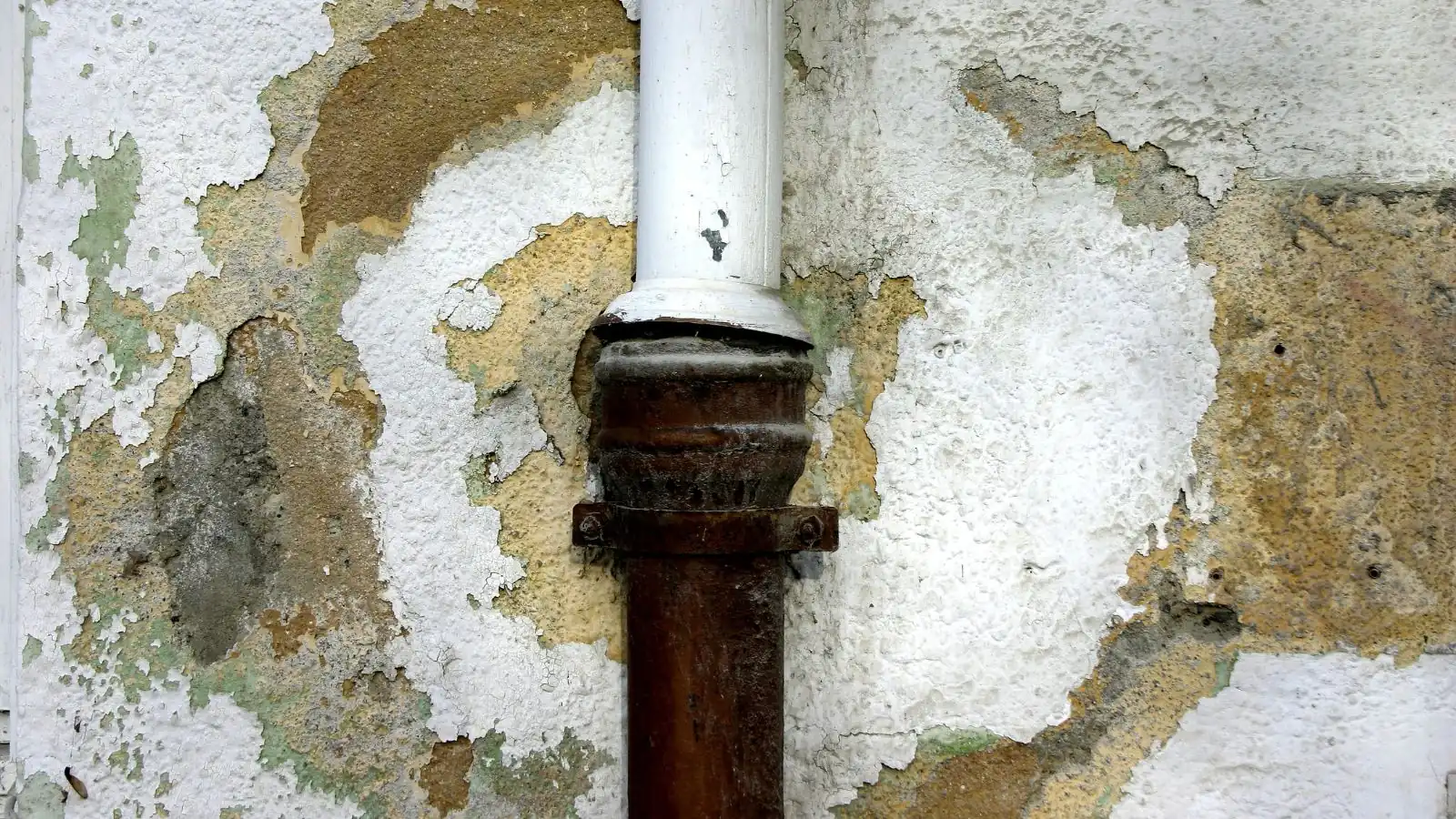
What water does inside a wall
Drywall is gypsum between paper facings. Water soaks into it, travels upward by wicking and weakens the board. Behind it sit studs, insulation and sometimes wiring and pipes. A stain on the outside is often a small part of the wet area, and the wall cavity can hold water that never shows on the surface.
The goal of wall and drywall water damage repair is to find the full extent with moisture readings, dry what can be dried, remove what cannot, and rebuild. Painting or caulking over a wet wall hides the symptom and leaves moisture inside.
Signs of a wet wall
| Sign | What it suggests | Next step |
|---|---|---|
| Brown or yellow stain | Water has soaked the paper | Find the source and measure moisture |
| Bubbling or peeling paint | Moisture behind the surface | Check the cavity |
| Soft or crumbling drywall | Long term or heavy wetting | Usually cut and replace |
| Musty smell, no visible stain | Water inside the wall | Moisture mapping with a meter and camera |
| Warped baseboard | Wall base is wet | Pull baseboard and check the bottom plate |
Dry it or cut it?
Drywall that was wet briefly with clean water can sometimes be dried in place if it is still firm and flat, using air movers and small openings to move air into the cavity. Drywall that has sagged, softened or crumbled is cut out, because it will not regain strength. Wet insulation is almost always removed. Contaminated water, such as sewage or flood water, means affected drywall and insulation are removed.
When cutting is needed, crews often make a flood cut, a clean horizontal cut above the wet line, commonly 2 feet or so above the floor but set by the readings. The cut exposes the cavity so it can dry. After drying, new drywall is hung, taped, finished and painted. The drying steps are described on the structural drying page, and ceilings are handled on the ceiling page.
Common causes
Walls get wet from supply line leaks, drain leaks, roof and window leaks, appliance hoses and flooding. The kitchen is a frequent source, see the kitchen page, and a pipe failure inside a wall is covered on the burst pipe page.
What shapes the cost
Wall area affected
More wet wall means more cutting, drying and finishing.
Insulation
Wet insulation is removed and replaced.
Water category
Contaminated water requires removal, not drying.
Finishes
Texture, paint, trim and cabinets that must be matched.
Drying time
Closed cavities dry slowly without openings.
The scope and price are explained before work starts. Call (833) 521-1033 for your own.
Insurance and walls
Insurers want to see the source and the damage, so photograph the wall before any cutting and keep samples of the material. Coverage depends on the cause, so check your policy or ask your insurer.
Serving Byron Center and nearby towns
Calls come from Byron Center, Dorr and Caledonia. Tell the dispatcher whether the wall is interior or exterior and what is on the other side, such as a bathroom, kitchen or the roof.
What a rebuild involves
After the wall reads dry, new drywall is cut to fit, hung, taped and sanded. Texture is matched to the room, and primer and paint go on last. If insulation was removed, it is replaced before closing the wall. Trim, switch plates and baseboards come back after paint. A wall repaired well should be invisible, which is the reason to wait for dry readings before rebuilding, because closing a damp cavity brings the problem back.
Before you call
Note where the stain is, how large it is and whether it has changed. Press gently on the lower wall to see if it feels soft. Check the room above and the other side of the wall for a pipe, an appliance or an exterior opening. If a pipe is suspected, shut the water at the nearest valve. A short description helps the dispatcher decide what equipment and tools to bring and whether a plumber should visit first.
Frequently asked questions
Can wet drywall be dried instead of replaced?
Sometimes, if the water was clean, the board is still firm and it is dried quickly. Soft, sagging or contaminated drywall is cut out.
What is a flood cut?
A horizontal cut made above the wet line to open the wall cavity so it can dry. The height depends on the moisture readings.
Can I paint over a water stain?
Not until the wall is dry and the source is fixed. Paint over a wet wall traps moisture and the stain returns.
Do you rebuild the wall after drying?
Repair after drying is part of the job, and the scope is explained before work starts.