
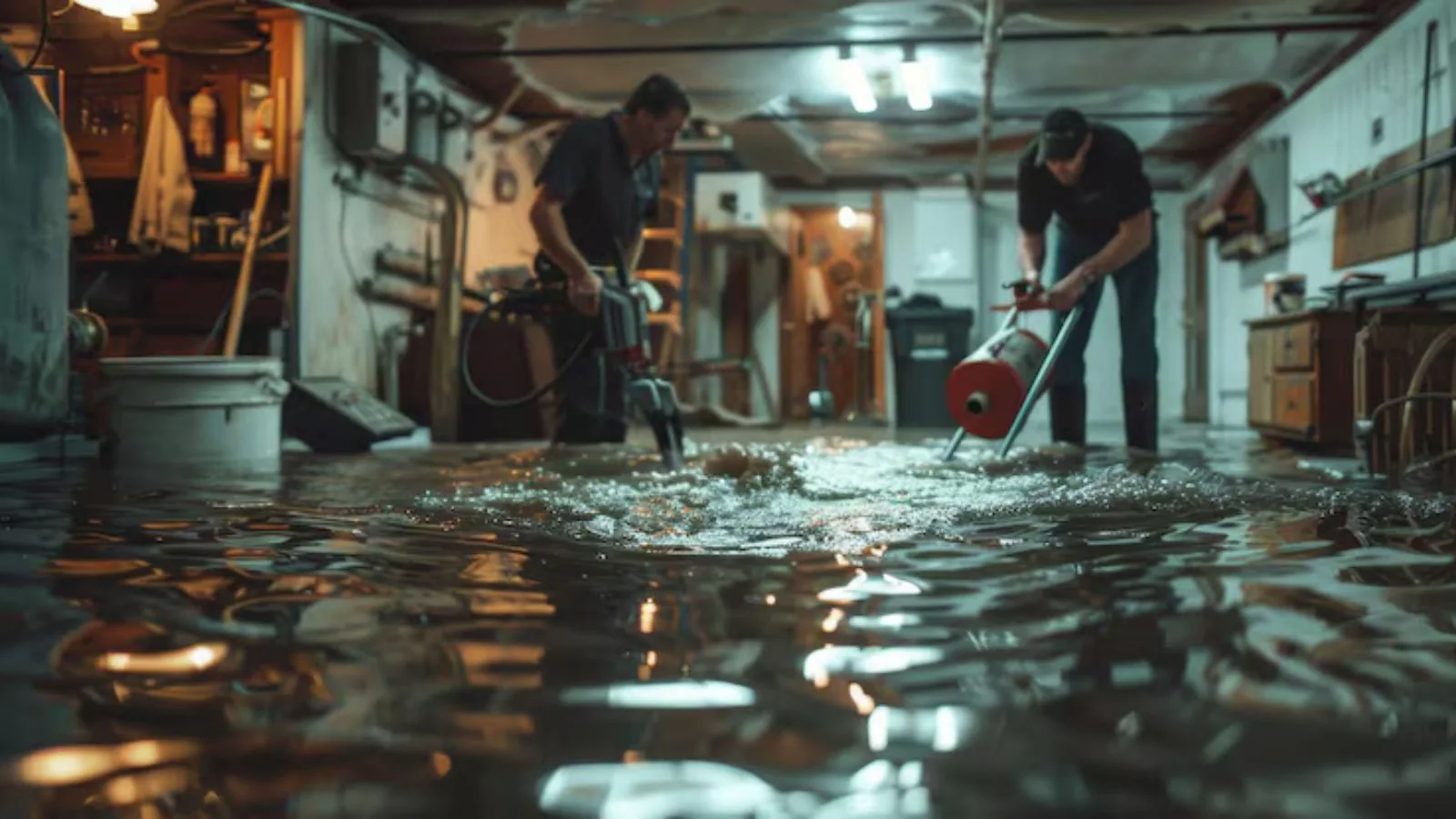
When standing water is an emergency
Emergency water extraction in Byron Center, MI is about speed and order. Water that sits on a floor starts moving into baseboards, drywall, subfloor and insulation within hours, so the job is to get the liquid out before the building soaks it up. The (833) 521-1033 emergency line answers 24/7, including nights, weekends and holidays, and the person on the phone can walk you through the first few minutes.
Before anyone arrives, these steps keep the situation from getting worse:
- Find the source and stop it. For a supply line that means the shutoff valve at the fixture or the main valve where the water enters the house.
- Turn off power to wet rooms only if the panel is dry and you can reach it without stepping in water. If outlets or cords are submerged, stay out and call the utility or 911.
- Lift what you can above the water: rugs, books, electronics, upholstered pieces, paper files.
- Keep children and pets away from the water, especially if it came from a drain or toilet.
- Take photos and a short video from the doorway before anything is moved.
How water extraction works
Extraction is the mechanical removal of liquid water, and it comes before every other step. Deeper water, usually anything above an inch or two on a hard floor, goes out with submersible pumps and hoses. What is left after pumping is pulled up with wet vacuums, and carpet and pad are worked with extraction wands that draw water out of the fibers and the cushion below.
The reason extraction comes first is simple physics. Air movers and dehumidifiers dry the air and the surfaces, but they cannot remove a puddle. Every gallon that stays behind has to evaporate through the room's air, and that is how a three day drying job turns into a week.
| Situation | Typical method | What follows |
|---|---|---|
| Shallow water on tile, vinyl or sealed concrete | Wet vacuum and squeegee | Moisture check at baseboards and under cabinets |
| Several inches of water through a finished room | Submersible pump, then wet vacuum | Carpet, pad and flooring decisions, then drying |
| Soaked carpet and pad | Extraction wand, often pad removal | Air movers on the carpet or a replacement plan |
| Water across an unfinished basement floor | Pump to a floor drain or outside discharge | Dehumidification and wall base checks |
What gets checked after the water is gone
A dry looking floor does not mean a dry house. After extraction a crew uses moisture meters to read wall bases, subfloor edges and the bottom of cabinets, and a thermal imaging camera to find cold, wet spots behind surfaces. Those readings decide what stays and what comes out. Drywall that is only wet at the bottom inch can often be dried, while saturated insulation almost never can.
If the readings show water in places you cannot see, the next step is structural drying and dehumidification, which uses air movers and dehumidifiers to bring the materials back to a normal moisture level. When the water was a flood from outdoors or a sewer line, the situation is different and covered under flood damage cleanup and sewage backup cleanup.
Know the water before you touch it
Restoration crews work from the ANSI/IICRC S500 standard, which sorts water into three categories. Category 1 comes from a clean supply such as a broken line. Category 2 carries some contamination, for example a washing machine overflow. Category 3 is grossly contaminated and includes sewage and river water. The category changes the protective gear, which materials can be saved and whether carpet is cleaned or discarded. Ask any company whether its crews work to that standard.
What shapes the cost
Water extraction cost depends on facts that can only be confirmed on site. A crew can explain the scope and price before work starts, and the phone call is where that conversation begins.
Depth and area
A few inches across one room is a smaller job than shallow water spread through several rooms.
Water category
Clean supply water is simpler than a contaminated source, which adds protective steps and disposal.
Materials affected
Tile and sealed concrete recover differently from carpet, pad and finished wood.
Time since the loss
The longer water sits, the more material it reaches and the longer drying runs.
Access and power
Basements, tight crawl spaces and long hose runs add setup time.
Pricing varies, so for a real number call (833) 521-1033 and describe what you see.
Insurance and documentation
Sudden and accidental water damage, such as a pipe that bursts, is often covered by a homeowners policy. Slow leaks and neglected maintenance often are not, and flood damage usually needs separate flood coverage. Check your policy or ask your insurer. Michigan's insurance department advises taking photos and video before cleanup, keeping receipts for emergency steps and avoiding permanent repairs until the insurer has inspected or says to go ahead.
Serving Byron Center and the towns around it
The crews that answer (833) 521-1033 cover Byron Center, Byron Township, Dorr and Caledonia. If you are not sure whether your address is covered, ask on the call. Homes in Byron Township get water through the Byron-Gaines Utility Authority, so a broken main on the street side of the meter is a call to the utility, while anything past the meter is yours.
Water still spreading?
Call now and describe the room, the depth and what you have already shut off.
Frequently asked questions
Do you handle water extraction emergencies at night or on weekends in Byron Center?
Yes. The phone line is open 24 hours a day, every day of the year. Extraction is the step where delay costs the most, so overnight and weekend calls are treated as urgent. Stay on the line, shut off the source if it is safe, and the dispatcher will tell you what to do next.
How long does water extraction take?
Pumping a basement or a single room often takes a few hours, while a whole floor or soaked carpet and pad can take longer. The drying that follows runs for days, not hours, and a crew can give a realistic plan once they see the space.
Should I use a shop vacuum myself while I wait?
For a small clean water spill on a hard floor, a wet vacuum rated for liquids is reasonable. Do not use a household vacuum on water, and never use any vacuum or fan on sewage or contaminated water. When outlets or cords are wet, leave the equipment alone.
Do you pump water out of a yard or a pool?
No. Outdoor pumping is a different service. The work here is removing water from inside homes and buildings and drying what it touched.