
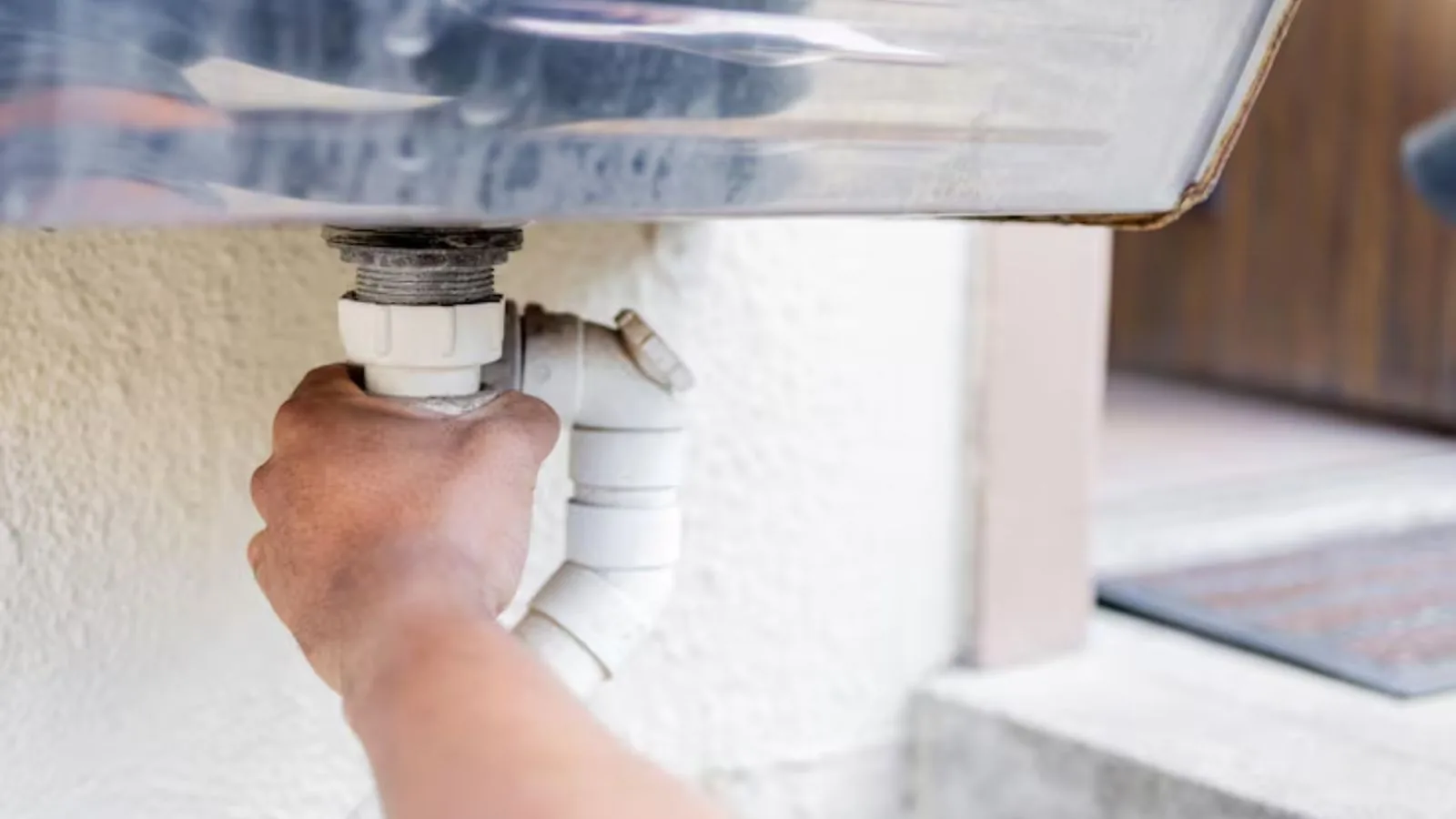
When a water heater leak is an emergency
Emergency water heater leak cleanup in Byron Center, MI is about two things happening at once: the tank may still be emptying, and the water around it may be hot. A typical residential tank holds 40 to 50 gallons, which is enough to cover a utility room floor and push into walls and flooring beyond it. Call the 24/7 line at (833) 521-1033 once the tank is shut down, and the crew handles the water while a plumber handles the heater.
How to shut it down safely:
- Turn the cold water supply valve on the pipe above the tank to the closed position.
- For an electric heater, switch off its breaker only if the panel is dry. For a gas heater, turn the gas control to off if you can reach it safely. If you smell gas, leave the house and call the gas utility or 911.
- Keep people and pets out of the room. Water from the tank can be hot enough to scald.
- Do not touch electrical parts that are wet or standing in water.
What a failing tank leaves behind
Most tank failures start at the bottom, where sediment and corrosion eat through the steel, or at a fitting. The water spreads across the floor, wicks into the bottom of the walls and drops through any gap into the level below. Utility rooms, basements and garages are common locations, and many have drywall, insulation or stored boxes within a few inches of the floor.
The damage depends on what is nearby. A concrete floor with a drain is a quick cleanup. A heater closet off a finished hallway can saturate carpet, baseboard and the bottom of the drywall before anyone smells anything wrong.
| Where the heater sits | What gets wet | Typical response |
|---|---|---|
| Unfinished basement with a floor drain | Concrete floor, stored items | Extraction, cleaning, quick drying |
| Finished basement utility room | Carpet, pad, baseboard, drywall base | Extraction, cut out wet drywall, structural drying |
| Garage or closet on slab | Wall bottoms, flooring at the door | Extraction, moisture mapping, drywall repair |
| Attic or upper floor | Ceiling below, insulation | Ceiling and insulation work, see ceiling water damage repair |
Cleanup and repair
After extraction, crews check the wall bottoms, door casings and the floor edge with a moisture meter. Wet drywall is cut out to a line above the readings, and the wall cavity is dried with air movers and a dehumidifier. Hot water also steams into the air, so the room's humidity runs high and everything nearby needs checking. Drywall repair follows once the framing reads normal, and the process is described on the wall and drywall page.
The tank itself belongs to a plumber. Replacement, venting and code requirements for the new unit are not part of restoration, and a restoration crew will not install heaters.
What shapes the cost
Room type
Concrete floors recover faster than finished floors and drywall.
How long it ran
A slow weep found early is smaller than a tank that failed while no one was home.
Wall and floor materials
Carpet, laminate and cabinets near the tank add removal and drying work.
Nearby contents
Stored boxes, furniture and electronics can add sorting or disposal.
Rebuild scope
Drywall, paint, base trim and flooring after drying.
Scope and price are explained before work starts. Call (833) 521-1033 to describe your setup.
Insurance and water heaters
A sudden tank failure that floods the house is often covered for the resulting water damage, while the cost of the old tank itself may not be. A leak that went on slowly for a long time often is not covered. Check your policy or ask your insurer, and keep the failed tank or take clear photos of it before disposal.
Serving Byron Center and the surrounding area
Calls come from Byron Center, Dorr, Caledonia and nearby neighborhoods. If your home is on a well rather than municipal water, say so on the call, because the shutoff steps for the supply line differ.
Frequently asked questions
Do you handle water heater leak emergencies at night or on weekends in Byron Center?
Yes. A tank that fails overnight is a common call, and the line is answered 24/7. Shut the cold supply, then call and describe the room.
Do you replace the water heater?
No. A plumber replaces the heater. The work here is water removal, drying and repair of the damaged drywall and floors.
Is the water around a leaking tank hot?
It can be. Stay out of standing water near the tank until the power is off and the water has cooled, and keep children and pets away.
Can drywall near the heater be saved?
Sometimes. If moisture readings show only the bottom inch is wet, it can often be dried. If water climbed higher or sat for days, cutting it out is usually the better choice.