
When an appliance leak is an emergency
Emergency appliance leak water damage in Byron Center, MI usually starts with a hose, a valve or a drain line. A washing machine supply hose can pour at full household pressure until someone closes the valve, and a dishwasher or refrigerator line can leak slowly for weeks before the floor gives it away. Close the appliance's supply valve, unplug it only if the outlet and your hands are dry, and call the 24/7 line at (833) 521-1033.
If you are not sure which appliance is leaking, work through these checks:
- Look behind and under the dishwasher and refrigerator for pooling water or a damp toe kick.
- Check the washer's hot and cold hoses at both ends, and the drain hose where it enters the standpipe.
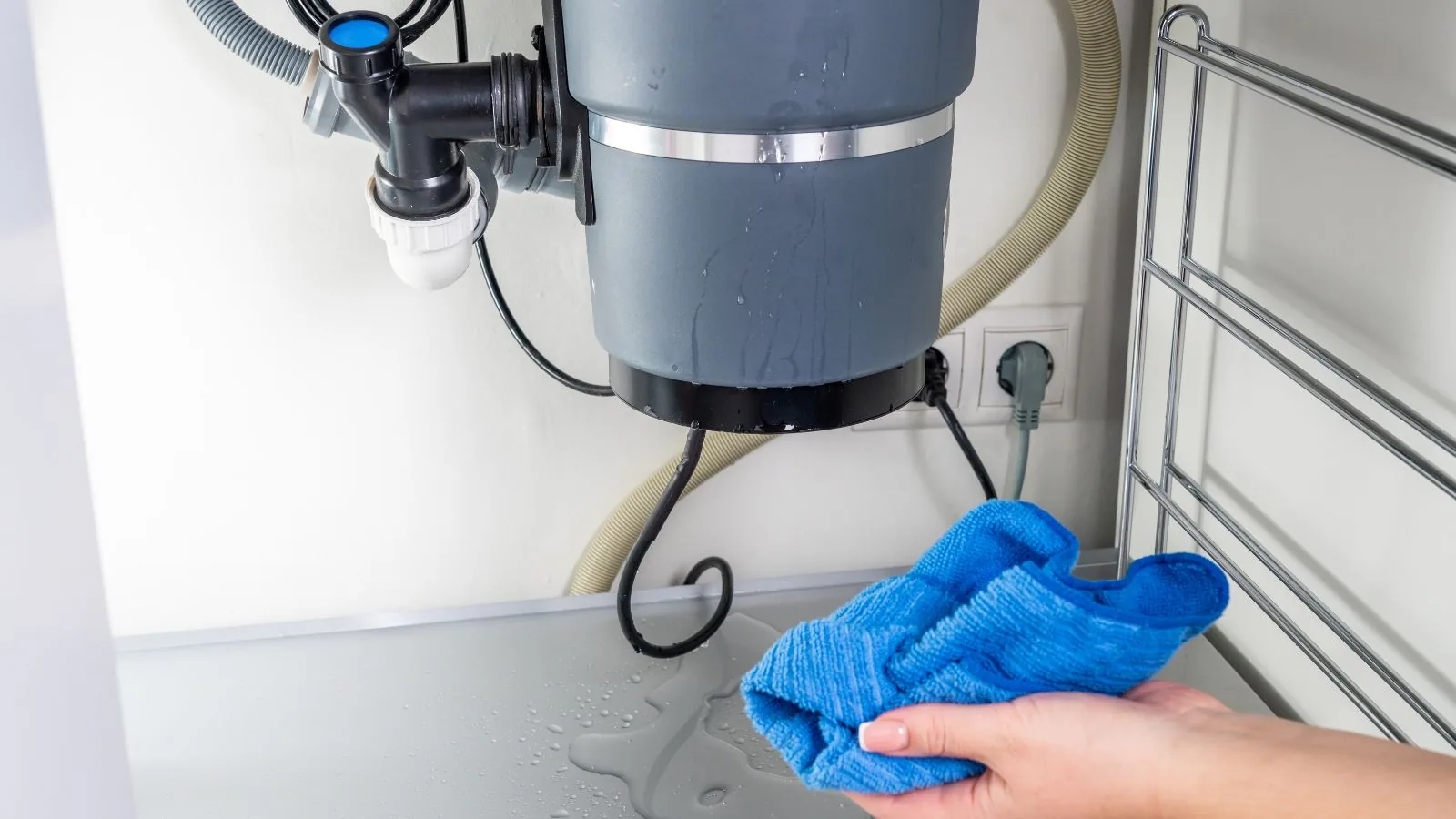
- Look in the cabinet under the sink for drips from the disposal, drain lines and supply connections.
- Check the floor in the room below. A ceiling stain under a laundry room means a hose or drain failure above.
How appliances fail
Most appliance leaks come from four places. Rubber supply hoses crack or burst with age. Plastic drain connections loosen or crack. Ice maker lines for refrigerators develop pinholes or a loose fitting. And condensate or overflow paths clog, sending water onto the floor instead of the drain.
The damage pattern follows the appliance. A burst washer hose floods quickly and widely. A dishwasher line often leaks under the cabinet and into the subfloor where no one sees it. A refrigerator line can stay hidden behind the unit and soak the floor under it for a long time.
| Appliance | Common failure | What to expect |
|---|---|---|
| Washing machine | Supply hose or drain hose | Fast, wide flooding and wet walls below |
| Dishwasher | Door gasket, drain line, supply fitting | Slow leak, wet toe kick and swollen cabinet base |
| Refrigerator or ice maker | Water line fitting or pinhole | Hidden leak under the unit, cupped flooring |
| Water softener or treatment unit | Fitting or drain line | Puddle in the utility room, damp wall base |
What the cleanup involves
After extraction, a moisture meter and thermal camera map the damage. Flooring under or around the appliance is the first priority, especially wood and laminate, which cup or swell when wet from below. Cabinet bases and toe kicks hold water in the cavity behind them and may need removal for drying. If the appliance sat on a finished floor, the subfloor may need drying too.
Water that stays inside a cabinet or wall for days invites mold. The EPA says mold can begin to grow in 24 to 48 hours on damp materials, so drying is not something to leave for the weekend. The wet kitchen cabinets and sink area are handled on the kitchen water damage page, and wet wood floors on the hardwood floor page.
The appliance itself belongs to a repair person. A restoration crew handles the water and the damage. It does not repair or replace machines.
What shapes the cost
How long it leaked
A burst hose found right away is smaller than a drain leak that ran for weeks.
Floor type
Tile and sealed vinyl handle water better than hardwood, laminate and carpet.
Cabinets and walls
Water in the cabinet base or wall cavity adds removal and drying steps.
Level below
A leak that reached the ceiling or basement below adds work there.
Rebuild scope
Flooring, trim, drywall and cabinet repair after drying.
The scope and price are explained before work starts. Call (833) 521-1033 for your own figures.
Insurance after an appliance leak
A sudden failure, such as a hose that bursts, is the kind of loss many homeowners policies cover for the resulting damage, while the cost of repairing or replacing the appliance usually is not covered. Gradual leaks often are excluded. Check your policy, ask your insurer and keep the failed hose or part as evidence.
Serving the area
The crews respond to Byron Center, Dorr and Caledonia homes, and condo and townhome owners should tell the dispatcher about neighbors below, because shared floors and ceilings add reporting steps for the association.
Frequently asked questions
Do you handle appliance leak emergencies at night or on weekends in Byron Center?
Yes. Washer hoses and dishwasher lines fail at all hours, and the line is answered 24/7. Close the supply valve and call.
Will you repair my appliance?
No. An appliance repair person or a plumber handles the machine and its connections. The work here is extraction, drying and damage repair.
How can I tell if a leak is under the dishwasher?
Check the toe kick for swelling, look for dampness on the cabinet floor and watch for a soft spot in the flooring in front of the machine. Moisture meters confirm it.
Does homeowners insurance cover a washer hose that burst?
Often for the resulting water damage, but not for the appliance repair. Policies vary, so ask your insurer.