
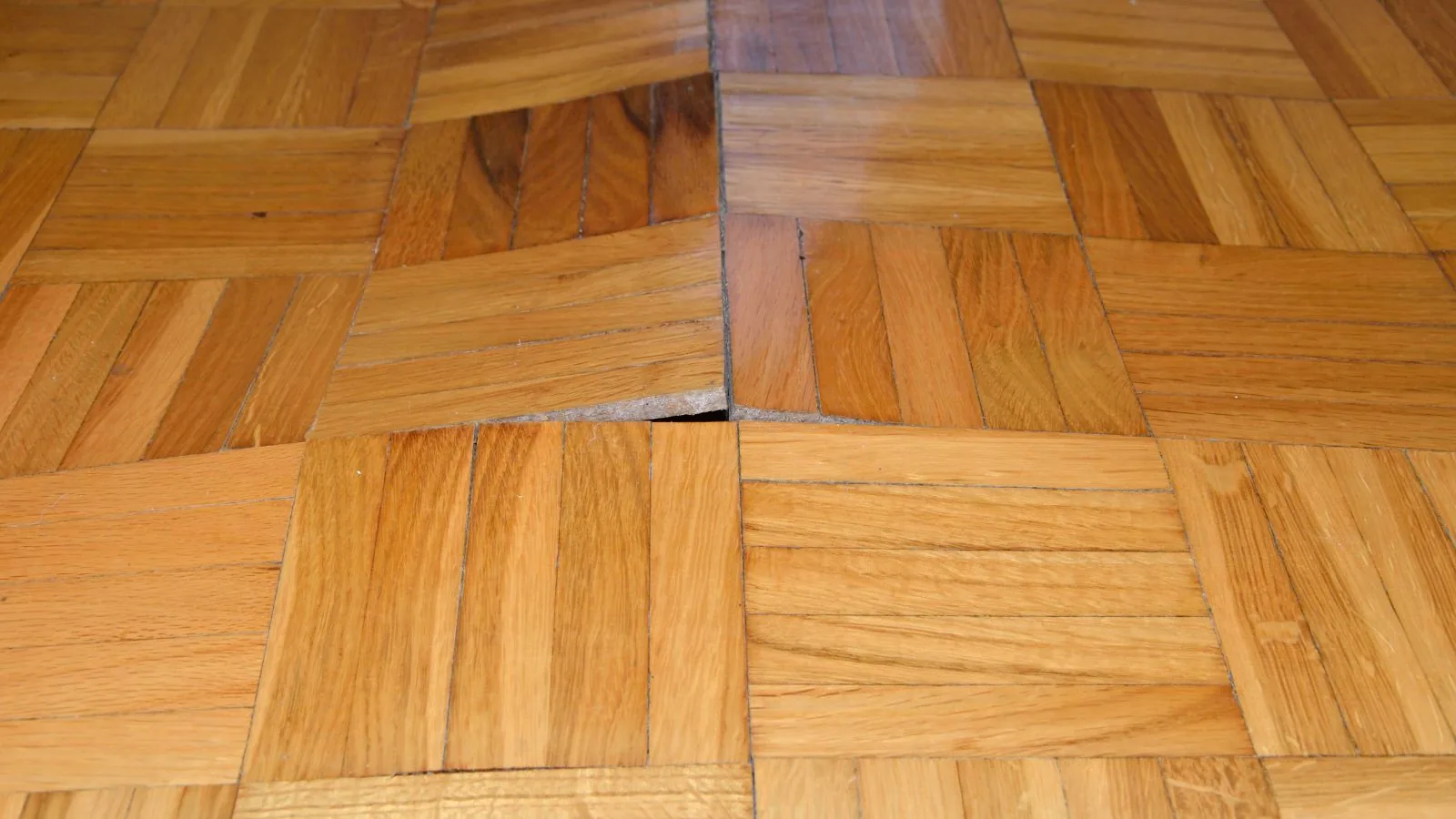
What happens when water reaches a hardwood floor
Wood absorbs water through its sides and underside, swells across its width and shifts. The first sign is often cupping, where board edges rise above the center. Crowning, the reverse, appears when the center rises and often follows a dry-out that happened too fast after cupping. Finish cracking, gaps or staining and a musty smell come next if the wood stays wet.
The aim of hardwood floor water damage repair is to bring the moisture content down evenly before boards are sanded or replaced. Forcing heat onto a wet floor makes it worse, because the top dries before the underside and the boards crack.
First steps
- Stop the water source and wipe up standing water.
- Lift rugs, mats and furniture legs from the wet area.
- Do not use a heat gun, a space heater or a hair dryer.
- Do not wax or seal the floor.
- Photograph the boards before and after cleanup.
- Call (833) 521-1033 and describe the type of floor and how long it has been wet.
Solid, engineered and laminate floors
| Floor type | Water behavior | Usual outcome |
|---|---|---|
| Solid hardwood | Absorbs and cups, can be dried if caught early | Dry in place, then sand and refinish if flat |
| Engineered wood | Layers can separate or delaminate | Often replaced if layers lift |
| Laminate | Core swells at seams and does not recover | Usually replaced |
| Floating floor over a slab | Water trapped between floor and slab | Lift the floor and dry underneath |
How floors are dried
Drying a wood floor often involves special mats or panels that pull moisture out of the boards while a dehumidifier controls humidity in the room. In some cases a few boards are removed to let air reach the subfloor. A moisture meter checks the boards, the subfloor and a dry reference piece. Drying takes days, and the readings decide when to stop.
If the floor is flat when it is dry, it can often be sanded and refinished. If the boards stay cupped or have separated, sections are replaced. Floors that sit on a slab are explained on the slab leak page, and a flooded room is covered on flood damage cleanup.
What shapes the cost
Board type
Solid, engineered and laminate floors respond differently.
Area affected
More square footage needs more equipment and refinishing.
Time wet
Floors wet for several days have cupped further and may need replacing.
Subfloor condition
Moisture below the boards slows drying.
Finish work
Sanding and refinishing after drying.
A crew explains scope and price before work starts. Call (833) 521-1033 for your own.
Insurance and floors
Coverage depends on the cause. A burst supply line is often treated differently from a slow leak or rising groundwater. Keep photos, receipts and the plumber's report, and ask your insurer what applies.
Serving Byron Center and nearby towns
Calls come from Byron Center, Dorr and Caledonia. Say what the floor is made of, whether it is nailed or floating, and what is underneath, since each changes the plan.
Questions to ask about a wood floor
Ask what kind of floor you have, whether it is nailed, glued or floating, and what sits underneath. Ask whether the plan involves drying mats or removing boards, and how the finish will be matched if sections are replaced. Old floors that were refinished several times have less wear layer left, which limits another sanding. Photos from before the loss, if you have them, help the crew and the adjuster compare the floor's condition.
Why speed matters for wood
Wood reacts to moisture in hours, not weeks. The longer boards stay wet, the more they swell against each other, and the harder it becomes to bring them back flat. A floor that is dried within a few days has a much better chance of staying than one that sits wet for a week. If you notice a damp spot, treat it as time sensitive even when the room otherwise looks normal. Pulling a baseboard to look at the wall base and the board ends can show whether water has traveled under the floor.
Frequently asked questions
Can a cupped hardwood floor be saved?
Often, if it is dried evenly and quickly. Once dry, a floor that has flattened can be sanded and refinished. Boards that stay cupped or separated are replaced.
Should I use a heater or fan on the floor?
Avoid heat. Fans without humidity control can leave the subfloor wet. A dehumidifier and monitored drying give better results.
Is engineered flooring different from solid?
Yes. Engineered boards have layers that can separate when wet, and laminate usually does not recover.
How long does floor drying take?
Several days is common, and the crew checks moisture readings to decide when to stop.