
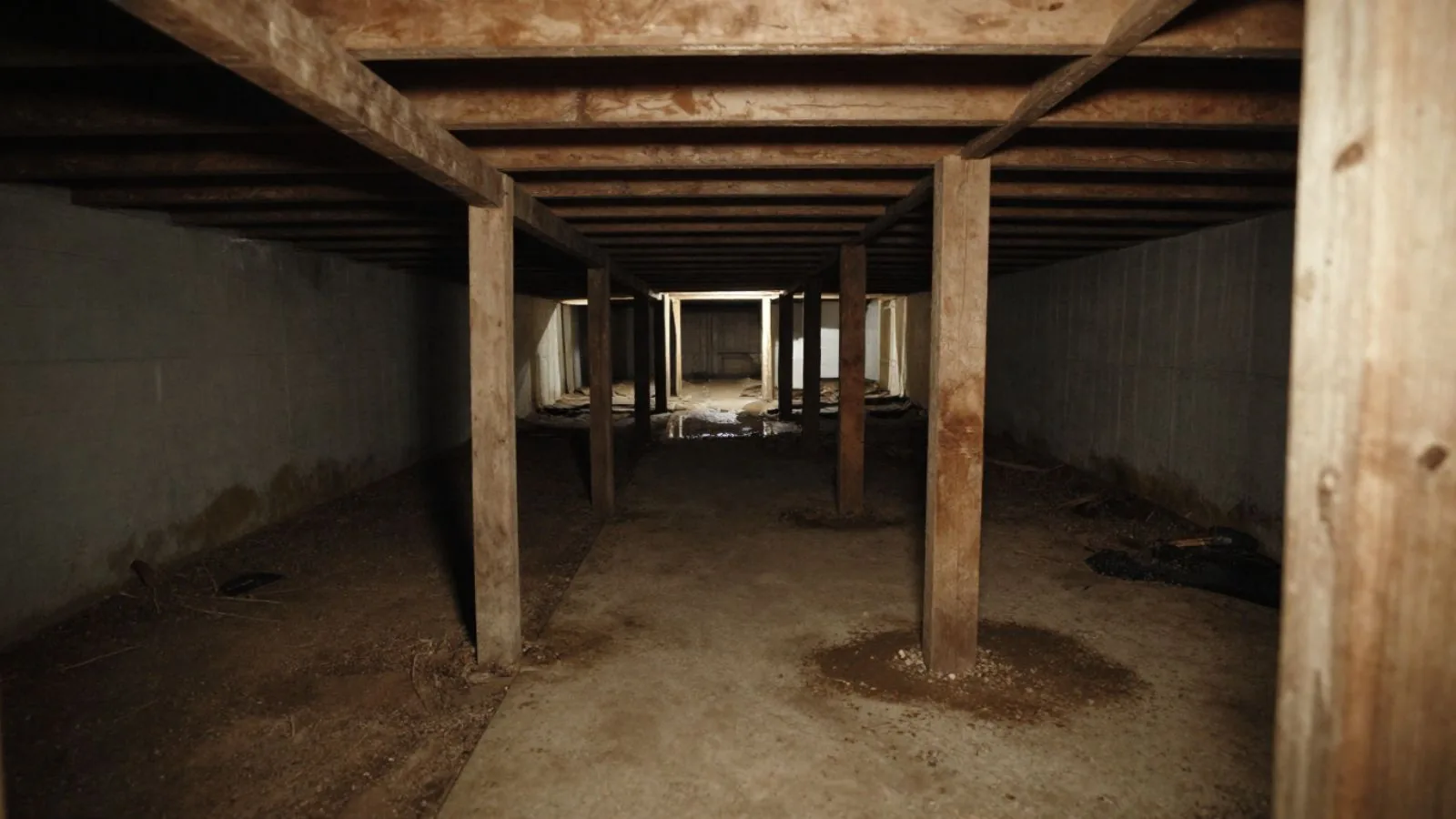
What counts as crawl space water damage
Crawl space water damage in Byron Center, MI covers any moisture problem in the shallow space under a floor: standing water after a leak or heavy rain, wet insulation, damp soil and condensation on joists and ducts. The space is dark, cramped and rarely checked, so problems can run for a long time unseen. If you have found water, a musty smell from floor vents or soft spots in the floor above, call the 24/7 line at (833) 521-1033.
Not every home has a crawl space. Many homes in the area have basements or slabs, and Byron Township's documents do not report crawl space counts. If your home has a crawl space, this page is for you.
How water gets in
Crawl spaces take on water several ways. A plumbing leak above drips through the subfloor. An irrigation backflow or a disconnected downspout dumps water against the foundation. Rain runs along the ground toward a low corner. Groundwater rises in wet seasons. Even without liquid water, warm humid air condenses on cool surfaces and soaks insulation.
The township's 2024 master plan maps soil types from loam to muck, sand and gravel, and notes that some soils are poorly suited for septic systems. Soil that drains slowly holds moisture against a foundation longer, which is a reason to know what is under your lot, but the plan does not say which soils cover which streets, so ask the county or a soil survey for your address.
Damage to look for
| Sign | What it means | Follow up |
|---|---|---|
| Standing water or wet soil | Active source or drainage problem | Stop the source, pump, then dry |
| Dark staining on joists or subfloor | Long term moisture | Moisture readings and mold conditions check |
| Sagging or fallen insulation | Water or condensation in the batts | Remove wet insulation |
| Soft or cupped flooring above | Moisture rising into the floor | Dry the subfloor and check the finish floor |
The cleanup process
The first step is to stop the water. A plumber fixes a leak, and a grading or gutter fix addresses outdoor water. Then standing water is pumped out with a small submersible pump, and any wet insulation is removed and bagged. Framing and subfloor are dried with air movers and a dehumidifier sized for the space, with moisture readings logged until they return to normal. If vapor barrier plastic is torn or soaked, it is replaced after drying.
Access is the practical difficulty. Some crawl spaces have 18 inches or less of clearance, so workers crawl, hoses run long and equipment setup takes time. That is a reason the scope and price are explained after a look, not by phone alone. Wet crawl space framing is part of the structural drying work, and a leak from a line under the house starts with burst pipe cleanup.
What shapes the cost
Access
Tight clearance and long hose runs add time.
Water depth and source
Standing water takes more steps than damp soil alone.
Insulation and barrier
Wet batts and torn plastic need removal and replacement.
Size of the space
Larger footprints need more equipment.
Drying time
Dirt floors and closed spaces release moisture slowly.
Pricing varies, so call (833) 521-1033 for a figure that fits your space.
Why a crawl space is hard to judge from above
From inside the house, a wet crawl space can look like nothing at all. The signs are indirect: a floor that feels springy near one wall, a musty smell when the heat comes on, ductwork that sweats, or pests that move toward moisture. Because the space is out of sight, ask for a look with a moisture meter and a camera before deciding what is needed. Photos of the framing and the soil give you a record for your insurer and a baseline if the problem returns after a wet season.
Do not enter a crawl space with standing water and live wiring or a gas appliance nearby. If lights, outlets or a water heater sit in the wet area, shut off the power at the panel only if the panel is dry and you can reach it safely, and let a trained crew handle the rest.
Insurance and crawl spaces
Sudden water from a plumbing failure may be covered. Seepage, long term humidity and surface water that enters from outside often are not, and flood damage usually needs separate coverage. Check your policy or ask your insurer, and photograph the space before and after cleanup.
Serving Byron Center and nearby towns
Crawl space calls come from Byron Center, Dorr and Caledonia. Say whether the water is clear or discolored, and whether the space has a floor drain or sump, because that shapes how the pumping is done.
Frequently asked questions
Can you pump a crawl space at night or on a weekend in Byron Center?
The line is answered 24/7, and urgent calls are triaged by depth and the source. A flooded space with active water is treated first.
Does a wet crawl space cause mold?
Wet or humid conditions are what mold needs, so damp insulation and framing should be dried promptly. Testing and remediation follow industry standard ANSI/IICRC S520, and health questions belong with a physician.
Do you waterproof crawl spaces?
No. Restoration dries and repairs what the water damaged. Sealing and grading problems are a separate trade and should be handled by a waterproofing contractor.
Can the insulation be dried in place?
Rarely. Wet batts hold moisture against the subfloor and are normally removed and replaced.