
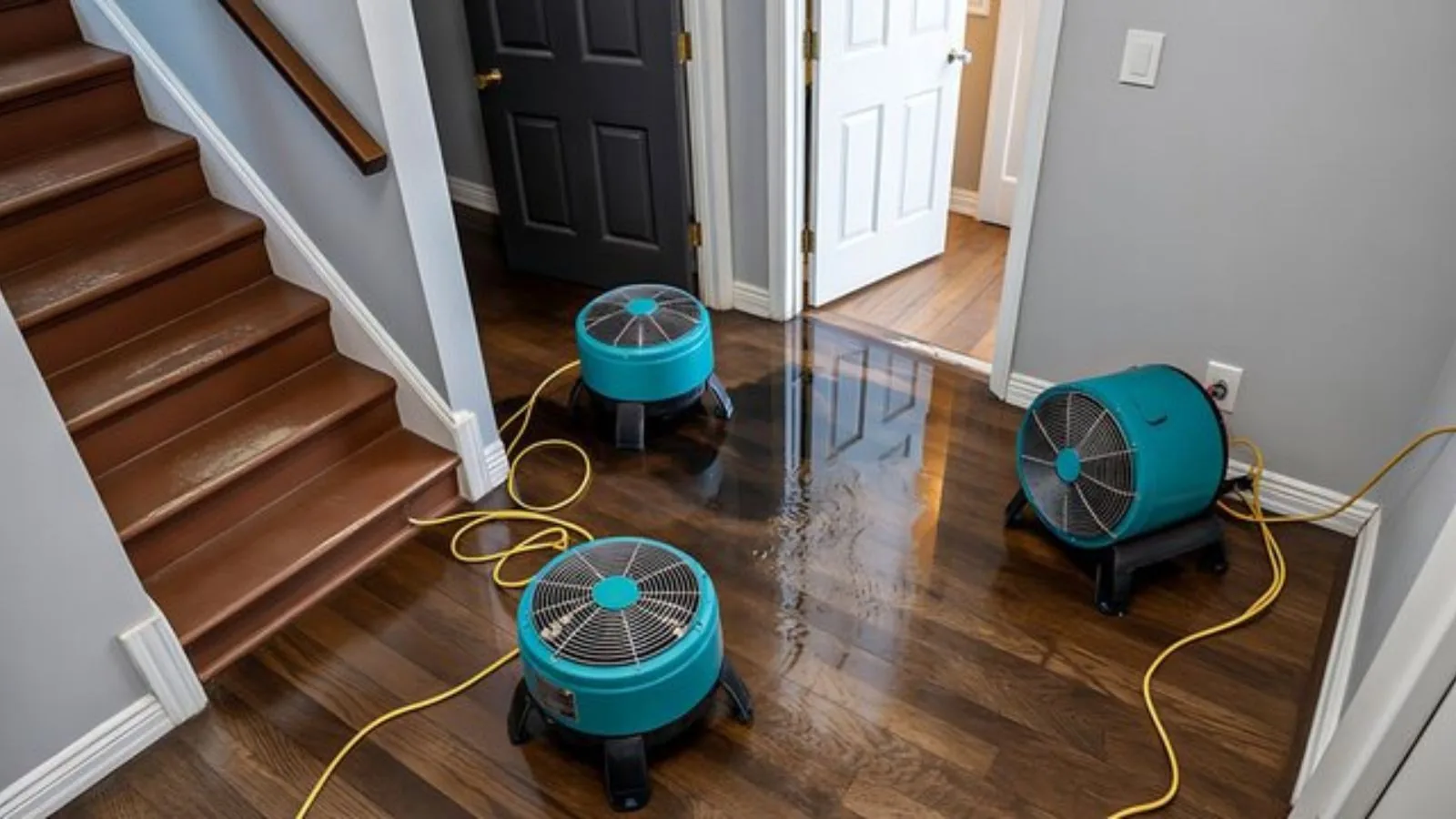
What you can usually handle
A small amount of clean water on a hard floor, wiped up within a short time, is a homeowner task. So is a damp towel pile after a short leak or a spill on a tile floor. These are surface problems with no water in the structure. Mop or blot, open windows if it is dry outside, run a fan and check the area the next day.
What needs a professional
Water that has soaked into drywall, carpet pad, insulation or subfloor is no longer a surface problem. These materials hold water and release it slowly, and a household fan cannot dry them reliably. Water that is contaminated, such as sewage or flood water, is also beyond a home cleanup, since it carries a health risk. Any loss large enough to cover a room needs equipment and readings to do properly.
| Situation | DIY is reasonable | Call a professional |
|---|---|---|
| Small clean spill on tile or vinyl | Yes | No |
| Clean water on carpet, caught within an hour, small area | Maybe, lift and dry fast | If it soaked the pad |
| Water in a wall or ceiling | No | Yes |
| Water on a basement floor with a sump issue | No if deep or contaminated | Yes |
| Sewage or flood water | No | Yes |
| Water more than a day old | Rarely | Usually |
| A smell that returns | No | Yes, find the moisture |
Warning signs that a loss is bigger than it looks
A floor that feels cool and damp after wiping, a baseboard that is darkening, a smell that keeps returning, a stain that grows and paint that bubbles are all signs of hidden moisture. If you have any of these, a moisture reading shows how far the water went. A reading costs little compared with replacing a wall.
What not to do
- Do not run a household vacuum on standing water.
- Do not use a heat source on wet wood floors.
- Do not walk through water near outlets and cords.
- Do not mix cleaners with bleach on contaminated surfaces.
- Do not wait to see if it dries on its own.
What a safe DIY dry looks like
If you handle a small clean loss yourself, remove standing water first, lift items off the floor, open cabinet doors and move air across the area. Run a dehumidifier in the room if you have one. Check the wall base and the floor edge by pressing, and look for darkening. Keep checking for a few days. If anything feels damp, stop and ask a professional to measure. The reasons for readings are explained on the structural drying page.
Carpet is the in-between case
Wet carpet is often a borderline job. If the water was clean and you act quickly, you may lift the carpet at an edge and dry the area. If the pad is soaked, it usually needs to come out. See the carpet water damage page for how a crew decides.
Byron Center local notes
Basements in this area often have sump pumps, and sump or groundwater events are treated as contaminated, so they are not a DIY dry even when the water looks clear. If your basement takes on water after a heavy rain, keep out of deep water, stay away from the electrical panel and call. Michigan homes with finished basements also carry carpet, drywall and trim that hold water.
Municipal sewer serves much of the developed township east of Ivanrest Avenue and north of 84th Street, according to the township's 2024 master plan, and septic serves rural parts. A sewage backup is never a DIY cleanup, whichever system you have.
The middle cases
Some losses sit between DIY and professional. A clean spill on carpet over a small area, caught right away, can often be handled by lifting the carpet and drying it with a fan and dehumidifier, then checking the pad. A damp spot under a sink after a drip can be dried by removing the cabinet contents, wiping the base and running air for a day or two. The test is whether you can confirm the area is dry. If you cannot confirm it, ask a professional to read it.
Time is part of the test too. Water that has been present for more than a day or two changes category and spreads further, so a job that would have been DIY on day one may not be on day three.
Making the call
If you are unsure, call and describe what you see. The crews at (833) 521-1033 serve Byron Center, Dorr and Caledonia, and will tell you what the work involves. The scope and price are explained before work starts.
Frequently asked questions
Can I dry a wet wall with a fan?
A fan moves air across the surface. It rarely dries the cavity inside, so a wet wall needs readings and sometimes openings.
How wet is too wet for DIY?
Water in a wall, a ceiling, a pad or a subfloor is past DIY. So is any contaminated water.
Can I rent equipment to do it myself?
Equipment is used on jobs by crews. Without moisture readings you cannot tell when the structure is dry.
What if I already cleaned it and it still smells?
A returning smell suggests moisture remains. Call for a reading before it gets worse.