
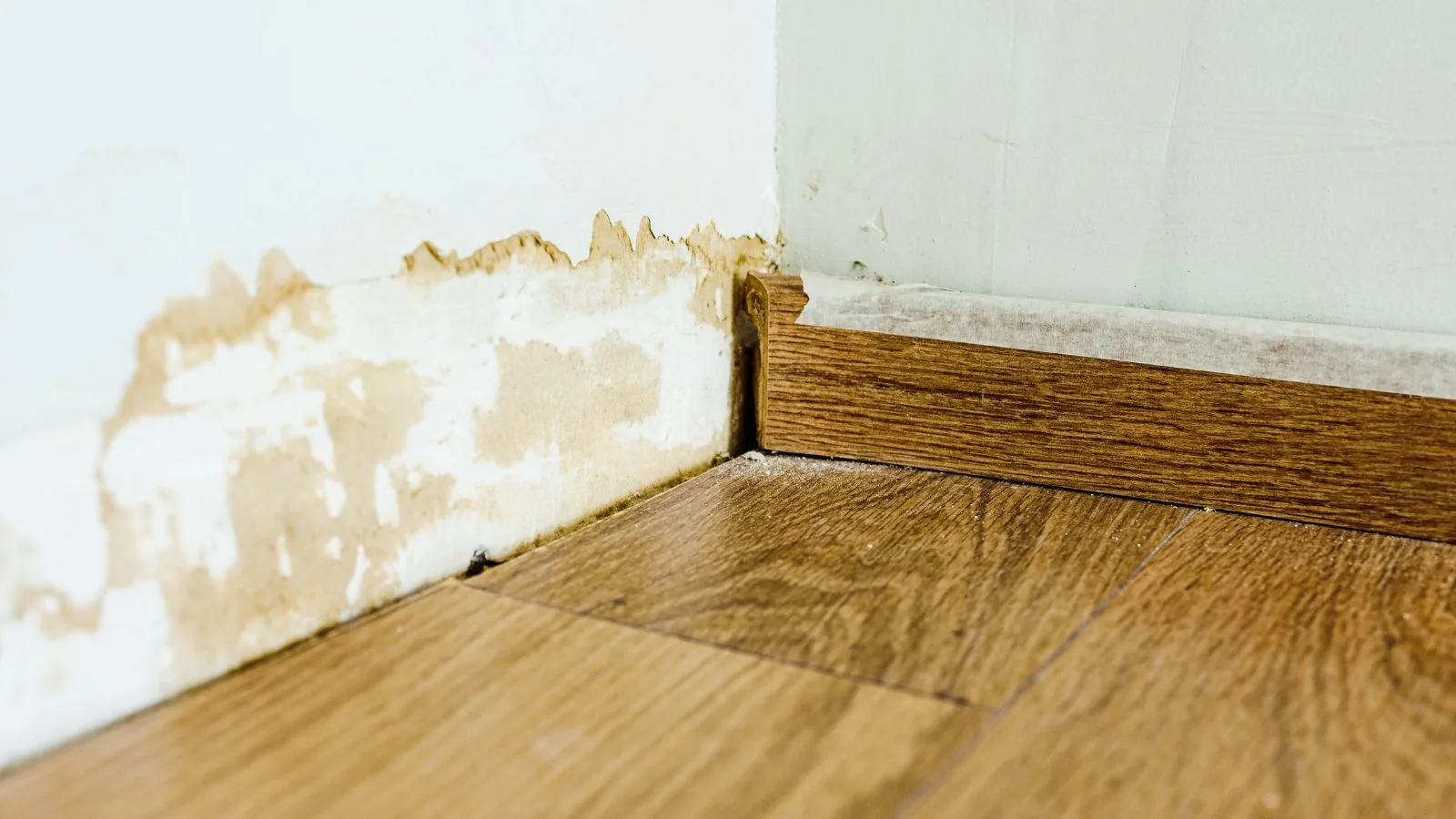
Start by finding out how big it really is
A stain on a ceiling or a damp spot on a wall may be the visible part of a larger problem. Before you decide whether to file, find out how far the moisture went. A moisture meter and a thermal imaging camera can show whether water is confined to one spot or has spread into the wall cavity or insulation. Deciding on a claim without that information is guessing.
This is general information, not insurance advice. Your insurer or agent can explain how your policy works.
The questions that decide it
| Question | If the answer is yes | If the answer is no |
|---|---|---|
| Is the cost of repair near or below my deductible | A claim may not pay anything | Coverage may matter more |
| Was the leak sudden and accidental | Coverage is more likely | A slow leak is often excluded |
| Is the source fixed | Damage will not grow | Fix it first, a claim may not help |
| Has the water spread into walls or floors | Repair may be larger than it looks | Smaller scope, easier to self fund |
| Have I filed other claims recently | A new claim may weigh more | Less concern |
What a deductible does
A deductible is the portion of a covered loss you pay. If your deductible is high and the repair is modest, filing may bring little or no payment. Even then, some insurers record claim inquiries, and some policies can be affected by claims history. Ask your insurer how an inquiry that does not become a claim is treated before you call.
Why small leaks grow
Moisture inside a wall does not stay small if the source continues. A weeping fitting can wet insulation and drywall for months and may later be classed as gradual damage that policies often exclude. If you see a stain, find the source, repair it and dry the area. Drying a small area early can prevent a larger loss. The burst pipe page and the appliance leak page describe common sources.
Ways to handle a small leak without a claim
- Fix the source with a plumber, and keep the invoice.
- Dry the area properly with a moisture meter, not only a fan.
- Replace only what is damaged, such as one section of drywall.
- Photograph before and after, in case a later problem appears.
- Keep records in a folder with the date and the plumber's report.
If a leak is large or the source cannot be found, the picture changes. A claim may make sense, and the reports you collect support it.
Byron Center local notes
Byron Township and the surrounding area have a mix of newer subdivisions and older farmhouses and village homes. The township's 2024 master plan notes that downtown buildings are mostly one and two stories and many are over a century old. Older homes can hide leaks in concealed spaces, so a small stain in an older house deserves a careful check. Newer homes can have a different problem, such as a leaking fitting inside a finished wall, and the same approach applies.
Michigan homeowners can ask the Department of Insurance and Financial Services for general consumer guidance about claims. It does not tell you whether to file, but it explains rights and process.
When it is a small leak and when it is not
Some leaks are genuinely small, like a drip at a faucet connection that wet a cabinet floor for a day. Others look small and are not, like a ceiling stain that sits under a bathroom with a slow drain leak. The difference is the source and how long it ran. A short event with a clear fix is more likely to be handled without a claim. A long hidden leak is more likely to need professional drying and may involve exclusions in the policy.
If you are on the fence, a moisture reading and a written scope cost little compared with a missed problem, and they give you facts to bring to a conversation with your insurer.
A note on records
Whether you file or not, keep a folder. Include photos with dates, the plumber's report, the invoice for the repair, readings from the drying and notes on what you replaced. If you sell the house later, a buyer's inspector may ask about past leaks, and the folder shows what happened and that it was fixed. If a second leak shows up years later, the records also help separate it from the first.
A practical path for a small leak
Stop the water. Photograph the damage. Have the area measured. Compare the likely repair cost with your deductible. Call your insurer with a general question if you are unsure, without filing. Then decide. The crews who answer (833) 521-1033 serve Byron Center, Dorr and Caledonia, and the scope and price are explained before work starts.
Frequently asked questions
Can I ask my insurer a question without filing a claim?
Yes, but ask how an inquiry is recorded. Policies and practices differ, so ask before you describe the loss in detail.
What if the leak turns out bigger later?
Keep your records. A later claim is easier to support if you can show when you found the leak and what you did.
Is a gradual leak ever covered?
Often it is excluded, but wording varies. Read your policy and ask your insurer.
How do I know if a stain is the whole problem?
A moisture reading shows whether water is behind the stain. A stain alone does not tell you.