
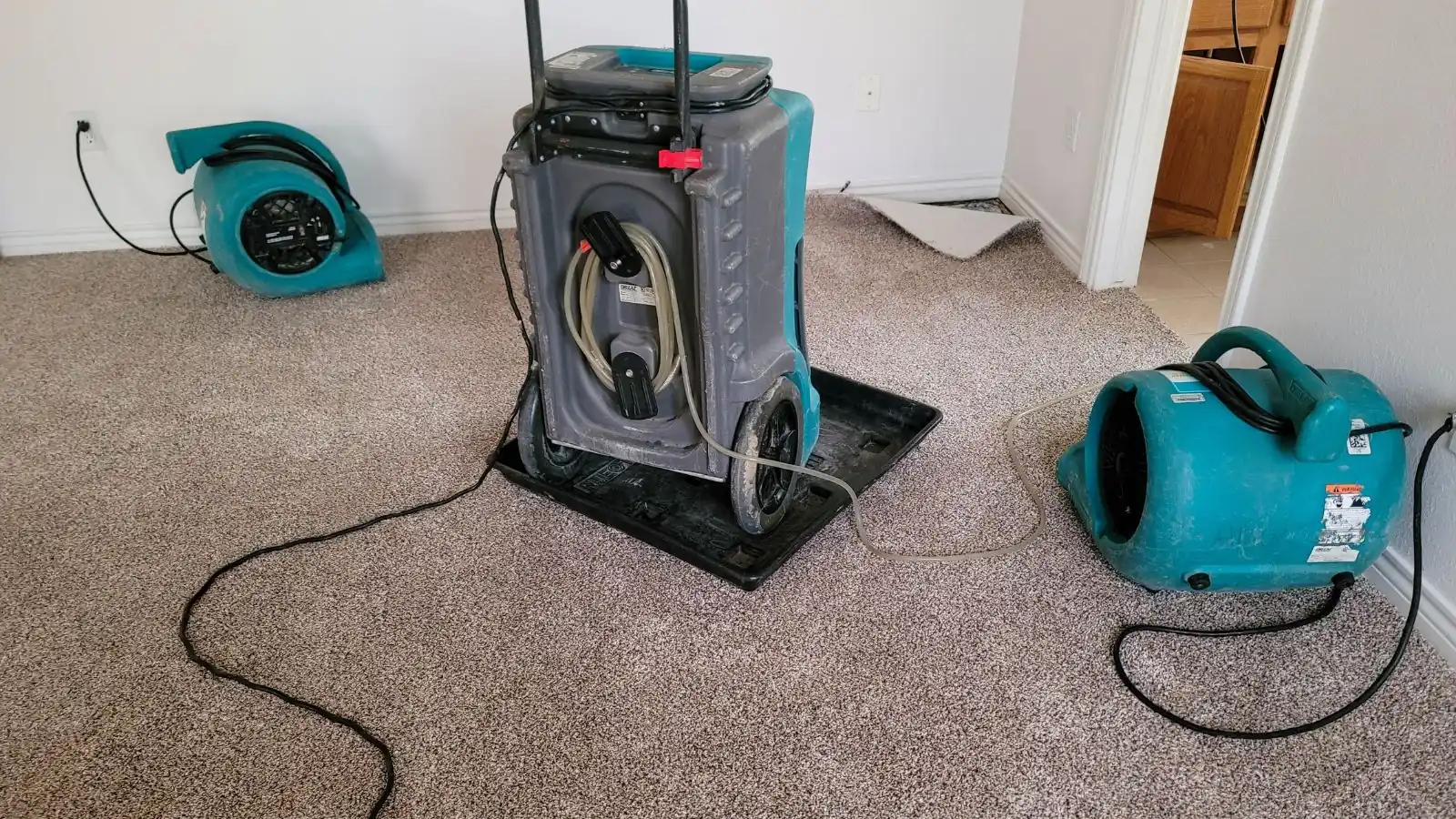
The honest answer: days, decided by readings
For most household water losses, drying with equipment takes several days. A small clean water leak caught quickly can dry faster, while a large loss in dense materials can run longer. Anyone who gives you a fixed number before measuring is guessing. Drying is finished when moisture readings return to a normal level for each material, not when a calendar says so.
This page explains what changes the timeline so you can ask better questions and judge a drying plan.
What sets the drying time
| Factor | Effect | Why |
|---|---|---|
| Amount of water | More water, more time | More material to dry and more moisture to remove |
| Material | Dense wet materials dry slowly | Hardwood, plaster and concrete release water slowly |
| Time before drying starts | Longer wait, deeper spread | Water wicks upward and outward |
| Water category | Contaminated materials are often removed | Removal replaces drying for porous items |
| Air temperature and humidity | Warm dry air dries faster | A humid house slows evaporation |
| Equipment and layout | Better placement dries faster | Air must reach wet surfaces and cavities |
| Closed spaces | Slower | Wall cavities and crawl spaces need special setups |
Typical stages of a drying job
First comes extraction, removing standing water, which is the quickest way to reduce drying time. Then the crew removes what cannot be saved, such as soaked pad or insulation. Next, air movers and dehumidifiers are placed from moisture readings, and the equipment runs while the crew checks readings each day. When the readings match a dry reference, the equipment comes out and repairs can begin.
Why a floor can feel dry and still be wet
The surface of a hardwood board, a tile floor or a painted wall dries long before the material under it. A hand on the surface cannot tell. A moisture meter reads water content in wood and drywall, and a thermal imaging camera shows cold spots that point to damp areas. That is the reason daily readings matter, and why homeowners who stop early often face musty smells and swelling weeks later. The sponge-like behavior of drywall and insulation is covered on the wall and drywall page.
Materials in order, from faster to slower
Carpet with the pad removed dries quickly when air moves across it. Drywall and wood framing dry over days. Hardwood flooring often dries more slowly because boards absorb water and release it gradually, and the process is explained on the hardwood floor page. Concrete slabs and masonry take the longest, since they hold water deep inside. These are general patterns, and the exact timeline comes from readings on your own house.
Byron Center local notes
Michigan has humid summers and cold dry winters, and both change drying. In summer, outdoor air can be humid, so a dehumidifier matters more and windows are usually kept closed during drying. In winter, the heat running inside can help, but cold basements and crawl spaces still release moisture slowly. Tell the crew whether the area is heated, since that changes the plan.
Basements are common in this part of Kent County, though the township's documents do not say how many homes have one. Concrete floors and block walls in a basement take longer to dry than upstairs rooms, so a basement loss often takes more days than a bedroom loss from the same volume of water.
A sample timeline for a clean water leak
To make this concrete, picture a supply line that splits in a second floor bathroom and soaks the floor, the ceiling below and one wall. Extraction happens the first day, wet insulation in the ceiling and the bottom section of the wall may be removed, and equipment is set. Over the next few days the crew returns to check readings, move equipment and adjust. As the wall and ceiling approach dry readings, equipment is pulled in stages. Rebuilding starts after. This is an illustration, not a promise, because every job reads differently.
Can I speed it up myself?
You can help in small ways. Remove wet rugs and furniture, open closet doors, run your heating at a normal level and keep windows closed during humid weather. Do not close wet items into plastic bags or boxes. Avoid heaters pointed at floors or walls, since uneven heat can crack wood. Household fans move air, but without a dehumidifier they push moisture around the house.
How a crew knows it is done
A crew compares readings on affected materials to readings from similar dry materials in the same building. When they match, the work stops. Ask for the final readings and the equipment log, since they support an insurance claim and show the job was finished properly. The water extraction step comes first, and the (833) 521-1033 line is open 24/7 for Byron Center, Dorr and Caledonia.
Frequently asked questions
Is three days of drying normal?
For many household losses, yes, though it varies. The crew decides by moisture readings, and a larger loss or denser materials can take longer.
Can I turn off the equipment at night?
Ask the crew first. Stopping and starting can slow drying, and equipment is placed to run continuously until readings are normal.
Does drying take longer in a basement?
Often, because concrete and block hold moisture and basements have less air movement. A dehumidifier is central to the plan.
Will I know when the drying is finished?
Yes, if you ask for readings. The crew should show you that the wet materials match dry reference readings.