
Two questions, not one
When you see a stain, ask whether it is old or new, and ask whether it is still wet. The two answers do not always match. A stain from a leak fixed years ago is old and dry. A stain that looks old may sit on a wall that is still wet from a slow leak. Moisture readings answer the second question better than the eye.
Signs that suggest an older stain
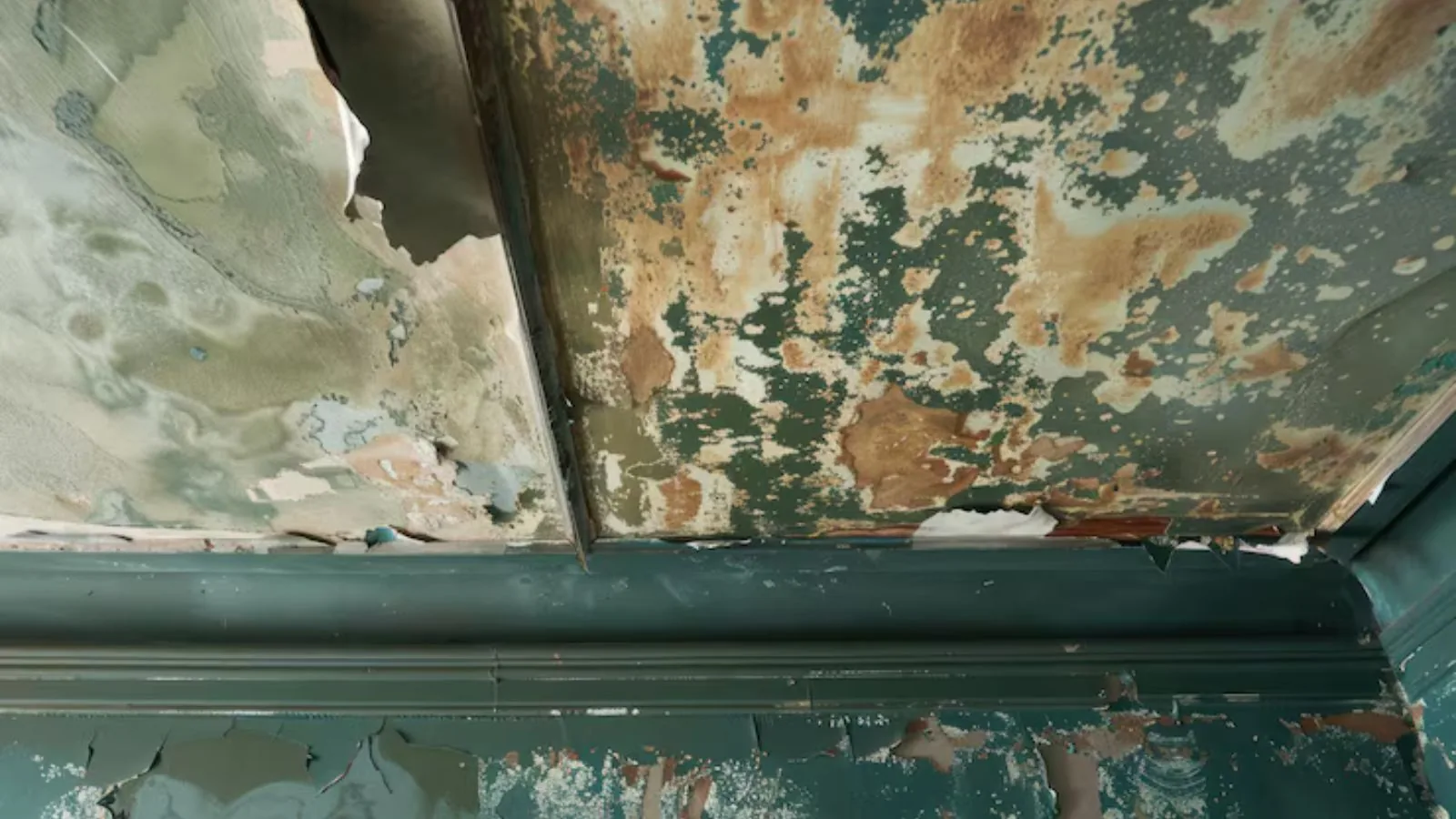
Old water damage often leaves a stain with a clear edge and a tan or brown ring. The center may be pale and the edge darker, because minerals concentrate where the water dried. Paint may be cracked or flaking. The area may feel dry and hard. Nails or screws may be rusted and surrounding wood may be dark. Several rings can suggest repeated wetting at different times.
Signs that suggest a newer or active problem
A newer problem often feels damp, cool or soft. The stain may have a soft edge, appear darker after rain or after running a fixture, or be changing size. Paint may bubble. There may be a musty smell. Drywall may sag or feel spongy. Drips, even faint, are the clearest sign that a source is active.
| Clue | Suggests older | Suggests newer or active |
|---|---|---|
| Edge of stain | Sharp ring, dried minerals | Soft, spreading edge |
| Feel | Dry and hard | Damp, cool or soft |
| Paint | Cracked or flaking | Bubbling or peeling |
| Change over time | Stays the same | Grows or darkens |
| Smell | Faint or none | Musty or sour |
| Nearby metal | Rusted | Rust is fresh or absent |
What moisture readings add
A moisture meter reads water content in drywall and wood, and a thermal imaging camera shows cooler areas where evaporation is happening. A stain with dry readings is likely old. A stain with high readings is wet now, whatever its age. Readings taken over several days show whether the area is drying or being fed by a source.
Why it matters to find out
An old dry stain may only need painting after the source is confirmed fixed. A wet one can lead to swollen drywall, wet insulation and deteriorating framing. The EPA notes mold can begin to grow on damp materials in 24 to 48 hours, which is a reason not to wait on a damp spot. For a stain overhead, see the ceiling water damage page.
What to do next
- Mark the edge of the stain with a pencil and date it, then check in a few days.
- Look above and behind the stain for a source, such as a plumbing fixture or a roof.
- Do not paint over it until the area is dry and the source is repaired.
- Photograph it and keep the photos with the date.
- If it is changing, call for a reading.
Byron Center local notes
Housing in Byron Township ranges from older farmhouses and village homes to subdivisions built more recently, such as the Walnut Ridge community across from Byron Center High School. Age does not decide whether a stain is active. A newer home can have a leaking fitting and an older one can have an old stain from a roof that has since been replaced. Ask any seller or previous owner about repairs.
Michigan has freeze and thaw cycles that can cause winter leaks at roof edges and in plumbing in exterior walls. A stain that appears or grows in spring after a thaw may be linked to winter conditions. Photograph it and monitor it through the next rain.
Why guessing the age is risky
People sometimes decide a stain is old because it has been there a while and ignore it. Others assume a new stain means a new leak. Both can be wrong. A slow leak can create an old looking stain that keeps growing, and a one time event can leave a new stain that is dry. The only way to know is to check the source, look above and behind and take readings. Photos taken now give you a baseline to compare against later.
Old damage that was never fixed
Sometimes a stain is old because the problem was never repaired, only painted over. In that case the area may still take on moisture each time it rains or each time a fixture is used. Look for the same location repeating the stain, a patch of fresh paint that has re-stained or a texture that is rougher than the surrounding wall. A moisture reading during or after rain or fixture use can catch an intermittent leak that is dry at other times.
When to call
If the stain is growing, damp or smells musty, call (833) 521-1033. The crews serve Byron Center, Dorr and Caledonia, and a reading shows what is going on behind the surface. The scope and price are explained before work starts. A related step, the wall and drywall page, covers what happens if the wall is wet.
Frequently asked questions
Can I tell the age of a stain by looking at it?
Not precisely. Edge, feel and change over time give clues, but only a moisture reading tells you whether it is wet now.
Is a dry brown stain a problem?
It may be old and harmless if the source is fixed and the area is dry. Confirm that before painting over it.
Why did my old stain get bigger after a storm?
A roof or flashing problem may be letting water in again. Photograph it and have the roof and the area checked.
Will stain blocking primer fix it?
Primer hides the color. It does not dry a wet wall or fix a source. Use it only after the area is dry and repaired.