
What the categories mean
The industry standard ANSI/IICRC S500 describes water damage in three categories based on how contaminated the water was at the source and how it changes over time. Category 1 comes from a sanitary source. Category 2 contains significant contamination and can cause illness if exposed. Category 3 is grossly contaminated and may carry pathogens. These are working definitions that restoration crews use to decide on protective gear, removal and cleaning.
Nothing on this page is medical advice. Anyone worried about exposure should talk to a physician.
| Category | Typical sources | Usual handling |
|---|---|---|
| Category 1, clean | Supply line, faucet, tub overflow with clean water | Extract and dry, many materials can be saved |
| Category 2, gray | Dishwasher or washing machine discharge, toilet overflow with urine only | Extract, clean and dry, porous materials may be removed |
| Category 3, black | Sewage, flood water, rising ground water, standing water that sat | Remove porous materials, clean and disinfect, dry |
Water can change category
Category 1 water that sits for a day or two can become Category 2, and Category 2 can become Category 3. Warm temperatures and time allow microorganisms to grow. This is why a clean leak that nobody found for several days may be treated differently from the same leak caught in an hour.
What this means for your belongings
Porous materials such as carpet pad, drywall, insulation and upholstery absorb contaminants and are the most affected. In Category 3, those items are normally removed and discarded. Hard, nonporous surfaces such as tile, glass and sealed concrete can usually be cleaned. Clean water gives you the most choices, which is one reason speed matters. A related guide covers what to keep, clean or throw away.
How a crew classifies water
A crew asks about the source and its path, looks at what the water touched, checks how long it has been there and uses readings. The classification is a judgment made on site, and a good crew explains the reasoning. If you are unsure, assume the higher category until a professional says otherwise.
- Where did the water start
- Did it pass through a drain, toilet, soil or insulation
- How long has it been wet
- What does it smell like and what color is it
- What did it touch, such as carpet or stored food
Category and protective steps
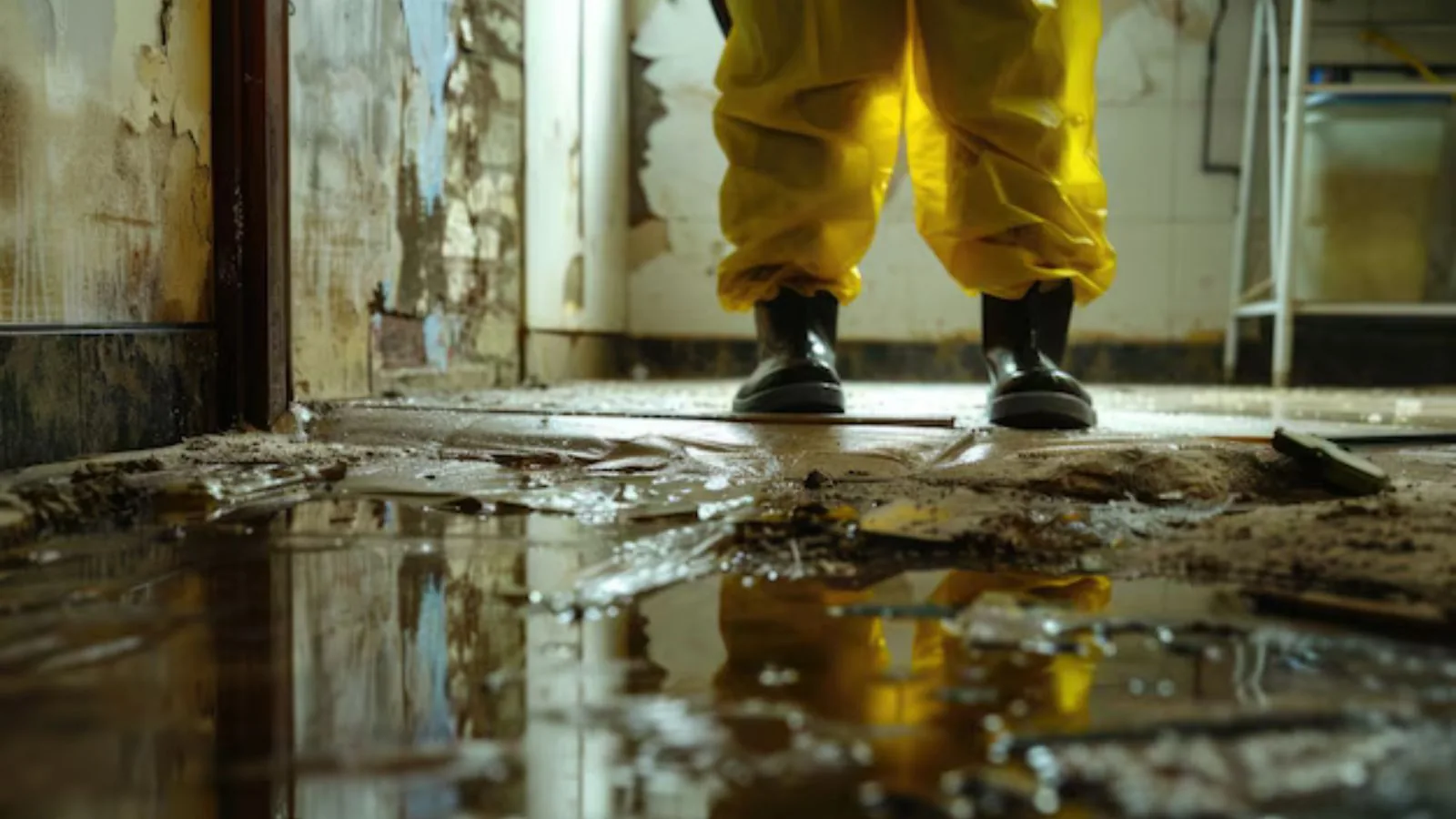
For Category 2 and 3, workers wear protective gear and contain the area so contamination does not spread. Household fans and shop vacuums are not appropriate for sewage, because they move contaminated droplets through the air. See the sewage backup page for the process, and the flood damage page for outside water.
Byron Center local notes
Which category applies often depends on where the water came from. In Byron Township, the master plan says township sewer serves most developed areas east of Ivanrest Avenue and north of 84th Street, while rural parts rely on septic systems. A backup from either source is Category 3. Water from a failed sump pump is groundwater and is typically treated as contaminated too, even if it looks clear.
The township's plan also lists county drains, including the Dorr and Byron Drain and the Knight Drain, managed by the Kent County Drain Commission. Surface water that enters from a drain overflow or runoff is treated as outside water, not as a clean supply leak.
Common mistakes with categories
People often assume that water from a tub or a sink is always clean, when a drain backup can turn it contaminated. They assume that a sump pit overflow is clean because it looks clear. And they assume that a dry surface means the problem is over, when contamination may sit in the pad or insulation below. When in doubt, ask the crew to explain the category and the reasoning. A good explanation names the source, the path and the time.
Categories and insurance
The category also shapes a claim. Insurers and adjusters pay attention to the source and path of the water, and the category is part of the documentation. Ask the crew to record the category and the reason on its scope, and keep the photos that support it. If the adjuster uses a different category, ask for the reasoning, since the answer changes what is removed and what is dried.
What to do while you wait
Stay out of Category 2 and 3 water, keep children and pets away and keep food and medicine out of the area. Photograph the water and call. The crews at (833) 521-1033 serve Byron Center, Dorr and Caledonia, and classify the water on arrival.
Frequently asked questions
Is clear water always Category 1?
No. Clear water from a sump pit, from the ground or from a supply line that has been sitting can still be contaminated. The source and time decide the category.
Can Category 3 carpet be saved?
Generally no. Contaminated carpet and pad are removed because the contamination cannot be reliably cleaned out.
Who decides the category?
The crew on site, using the source, the path and the time. Your insurer may have its own view, so ask for the reasoning in writing.
Does a sump pump failure count as flood?
Groundwater entering a basement is usually treated as contaminated water, and insurers often handle sump events separately from floods. Check your policy.